
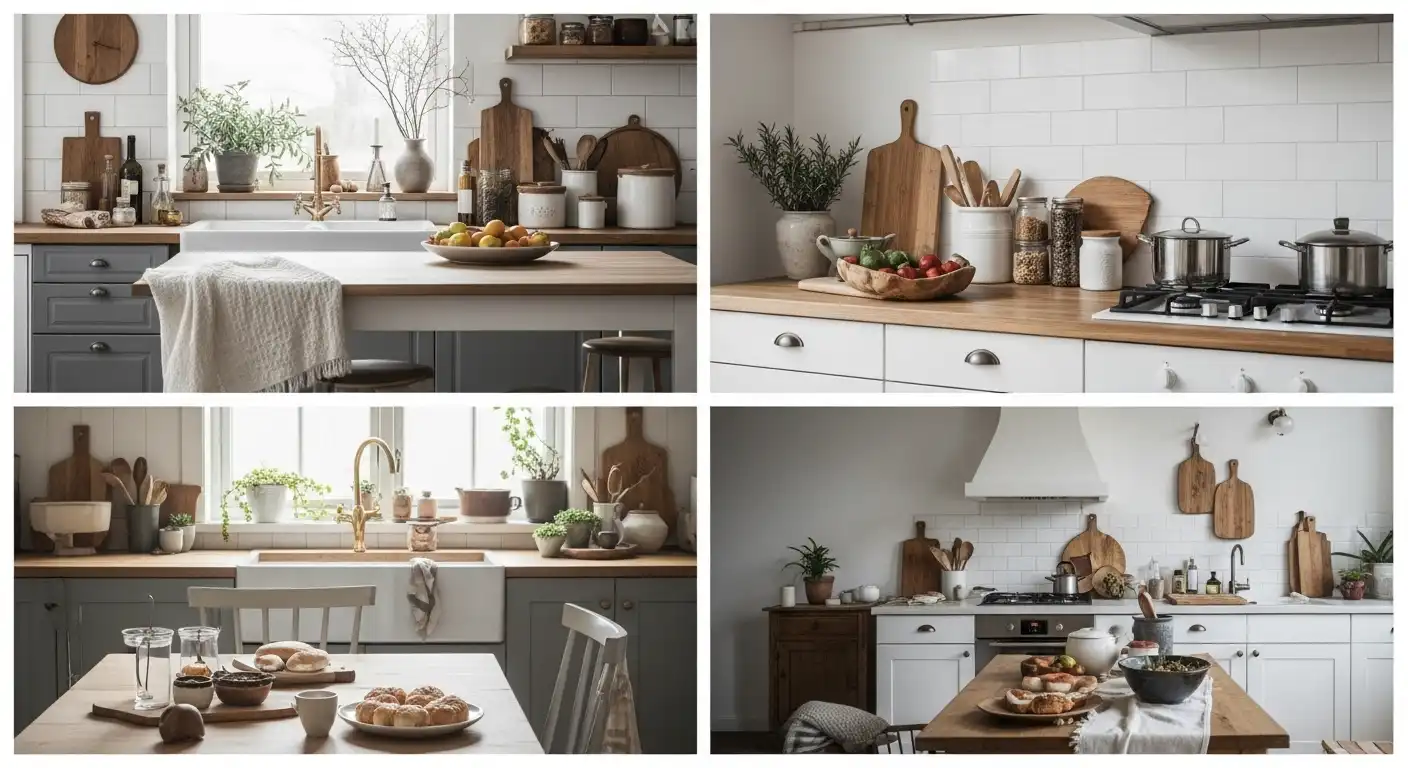
16 Winter Kitchen Decor Ideas to Make Your Space Cozy and Warm
As the temperature drops and frost begins to cling to the windowpanes, the heart of the home often feels neglected in the seasonal shuffle. We tend to focus our comforting efforts on living rooms with roaring fireplaces or bedrooms piled high with duvets, leaving the cooking space feeling cold and purely functional. However, transforming this workhorse room into a warm, inviting retreat requires only a few intentional shifts in texture and tone.
By introducing softer elements and richer palettes, you can create a space that encourages lingering over morning coffee rather than rushing through breakfast. It is not about a full renovation but rather the art of layering; bringing in tactile warmth and visual softness makes the room feel inhabited and serene. With the right winter kitchen decor, your culinary space becomes a haven where cooking soup on a snowy evening feels like a genuine luxury.
Top 16 Stylish Winter Kitchen Decor Tips for a Cozy Home
Designing a seasonal kitchen is less about holiday-specific kitsch and more about embracing the “hygge” lifestyle that champions coziness and well-being. The goal is to balance the hard surfaces of countertops and appliances with organic materials, ambient lighting, and deep, grounding colors. These ideas focus on harmonious flow and personal style, ensuring your kitchen remains functional while exuding a quiet, wintery elegance.
1. Layered Cutting Board Vignettes
One of the simplest ways to add immediate warmth to cold granite or quartz countertops is by grouping wooden elements as part of your winter kitchen decor. Lean a variety of cutting boards against your backsplash, mixing different wood tones like walnut, maple, and oak. The vertical layering breaks up the expanse of tile and introduces an organic, sculptural element that feels grounded, rustic, and perfect for the winter season.
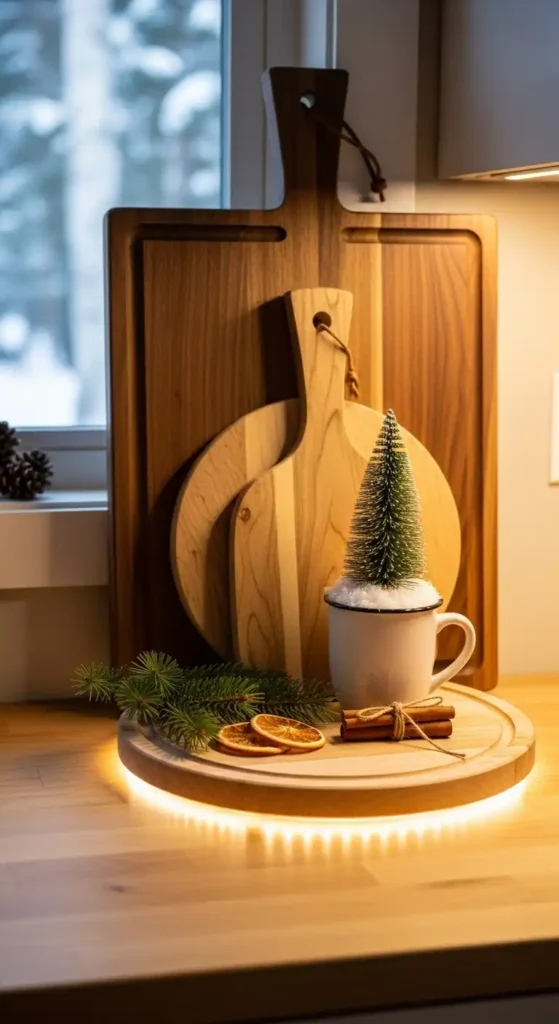
Beyond their visual appeal, these boards serve as a practical foundation for daily cooking rituals. You can place a small ceramic bowl of garlic or a potted herb in front of the stack to create depth. This arrangement transforms a blank corner into a purposeful, styled vignette that suggests a kitchen ready for hearty winter meal preparation.
2. Countertop Lamp Ambient Glow
Kitchen lighting is notoriously harsh, often relying on bright overhead LEDs that feel clinical during dark winter mornings. Introducing a small, table-style lamp to your countertop completely changes the atmosphere, offering a soft, localized pool of light. Choose a lamp with a fabric shade or a warm ceramic base to soften the hard edges of your cabinetry and appliances.
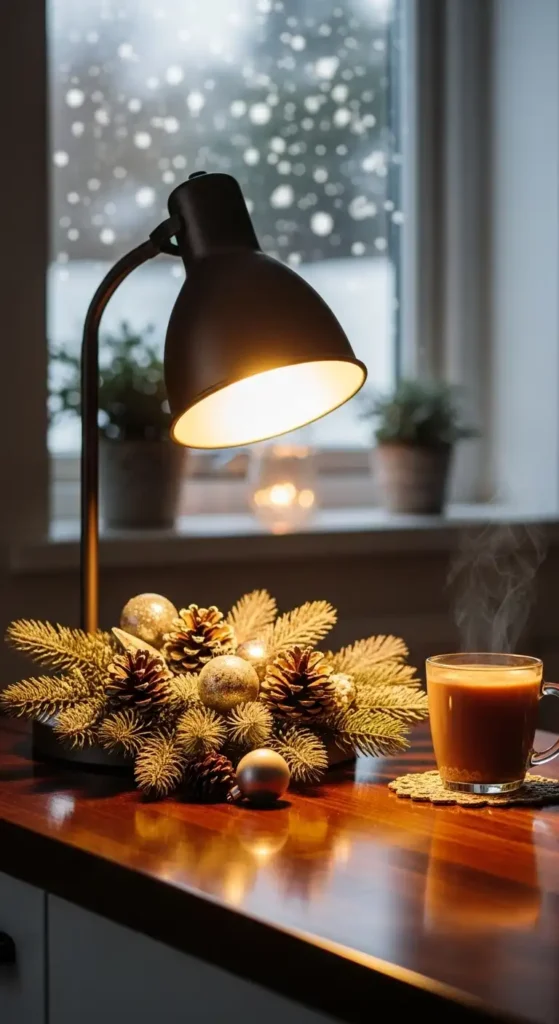
This unexpected addition brings a living-room sensibility to the kitchen, blurring the lines between utility and comfort. Leaving this small lamp on during the evening creates a gentle nightlight effect that makes late-night water runs or early morning tea rituals feel incredibly soothing. It is a subtle shift that significantly impacts the room’s emotional temperature.
3. Velvet Ribbon Accents
For a touch of elegance that feels distinctly seasonal without screaming “holiday,” utilize high-quality velvet ribbons as part of your winter kitchen decor. You can tie long, loose bows around the necks of glass jars, the handles of stoneware pitchers, or even the backs of wooden dining chairs. Deep jewel tones like burgundy, forest green, or navy blue add a rich splash of color against neutral kitchen backdrops.
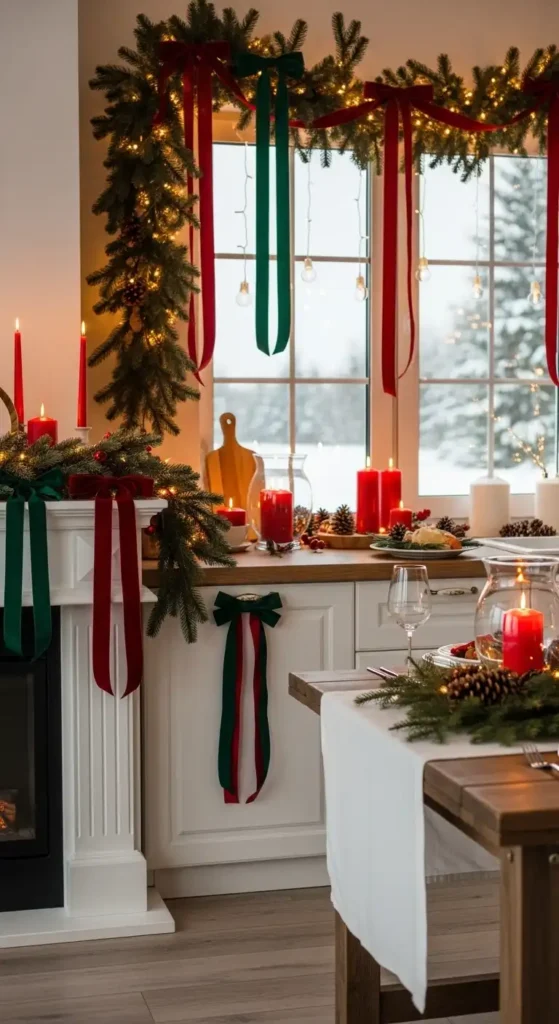
The tactile nature of velvet contrasts beautifully with the sleek surfaces of stainless steel and glass common in kitchens. This decor trick is ephemeral and low-commitment, allowing you to swap out colors as the winter progresses from the festive weeks of December into the quieter, moodier months of January and February.
4. Minimalist Faux Winter Florals
Fresh flowers can be scarce and expensive in winter, so high-quality faux botanicals become essential for adding life. distinct from vibrant spring blooms, winter arrangements should focus on structure and simplicity, such as white hellebores, paperwhites, or dried lunaria. Place a few tall stems in a heavy stoneware vase to create a focal point on an island or dining table.
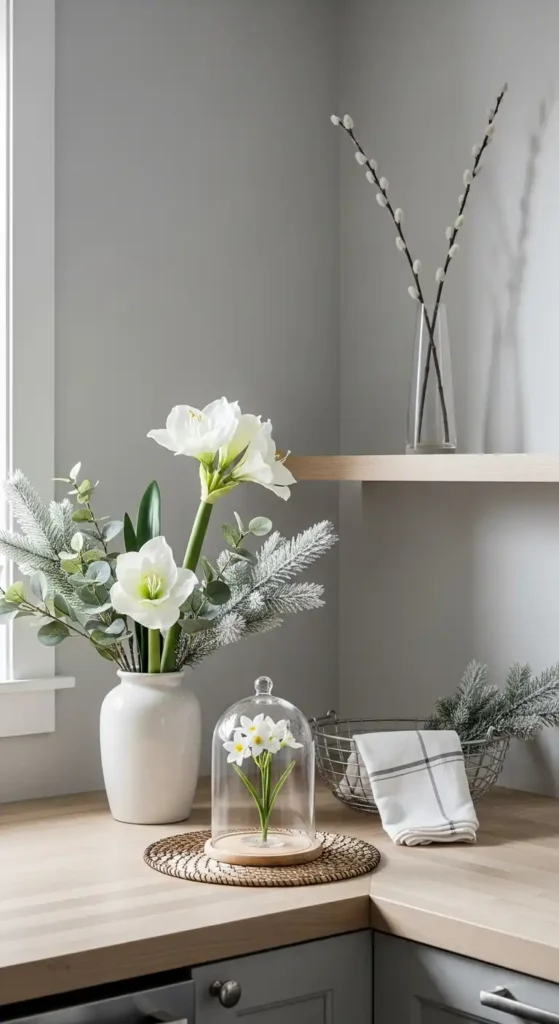
The key to this look is restraint, as a sparse, sculptural arrangement often appears more sophisticated and realistic than a crowded bouquet. These muted florals fit beautifully into winter bedroom decor ideas, complementing the grey and white light of the season while echoing the quiet, dormant beauty of the outdoors and keeping the interior feeling fresh and organic.
5. Textured Runner Rugs
Cold tile floors are one of the most jarring aspects of a winter kitchen, making a runner rug an absolute necessity for both comfort and style. Opt for a vintage-style wool runner or a thick, woven jute piece that runs the length of your main walkway or island. The fabric acts as a visual anchor, grounding the room and absorbing some of the echo that occurs in hard-surfaced spaces.
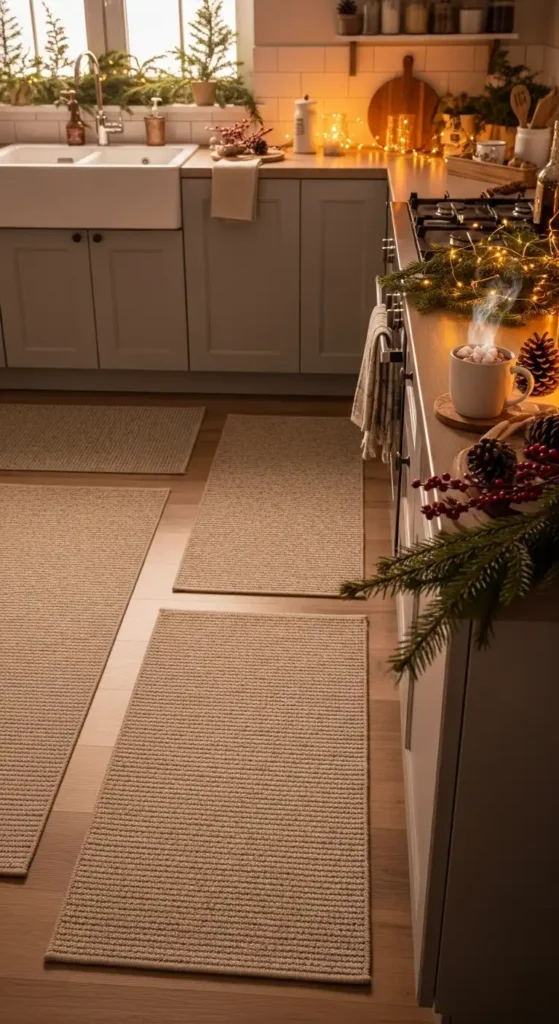
Functionally, a thick rug provides a barrier between your feet and the cold floor, making prep work much more pleasant. Visually, it introduces pattern and color, allowing you to inject personality into a space that might otherwise feel sterile. A well-chosen runner ties the cabinetry and flooring together into a cohesive design scheme.
6. Artisanal Ceramic Displays
Winter is the perfect time to display your heaviest, most tactile pottery, as these pieces evoke a sense of slow living and comfort. Open shelving or glass-front cabinets can be styled with stacks of handmade plates, oversized mugs, and stoneware bowls in earthy glazes. The imperfections and weight of artisanal ceramics feel appropriate for the season of stews and hot drinks.

If you do not have open shelving, simply keeping a beautiful ceramic crock filled with wooden utensils on the counter adds a similar effect. The combination of clay and wood is naturally warming. This approach celebrates the beauty of utility, turning everyday objects into key components of your seasonal decor.
7. Hot Cocoa Station Corners
Dedicating a small tray or corner of the counter to warm beverages creates an inviting “help yourself” atmosphere for family and guests. Arrange glass jars filled with cocoa powder, marshmallows, and cinnamon sticks alongside your favorite oversized mugs. A small wooden scoop or a shaker for chocolate dust adds a functional yet decorative detail to the setup.
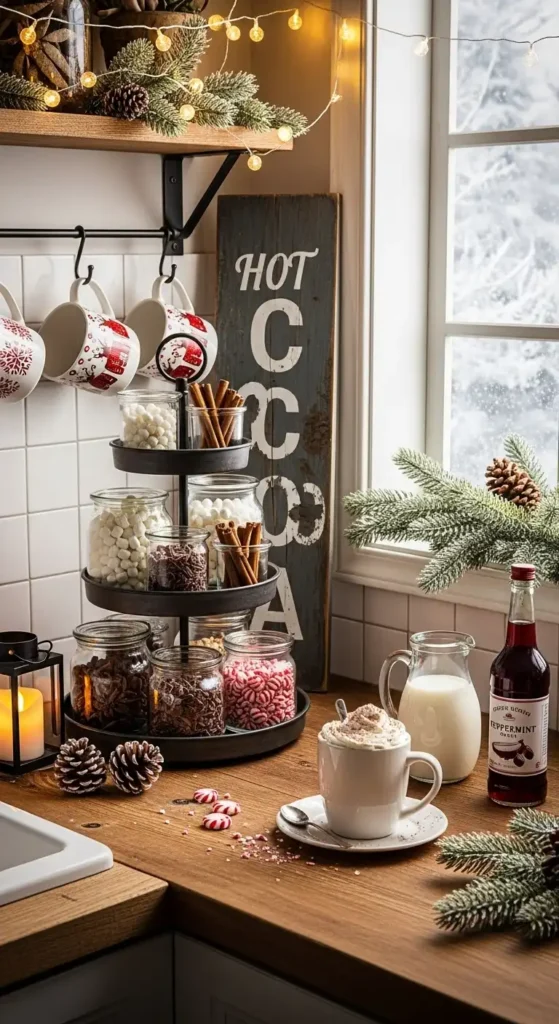
This station becomes a hub of activity on cold afternoons, encouraging family members to pause and connect. To keep it looking sophisticated rather than cluttered, stick to a unified color palette for the containers and accessories. A copper kettle or a specialized frother placed nearby completes the look of a dedicated warm beverage sanctuary.
8. Blush and Taupe Color Palettes
While traditional winter colors often lean dark, a modern trend involves embracing soft, dusty neutrals like blush pink and warm taupe. These shades reflect the pale winter sunlight and prevent the kitchen from feeling gloomy during shorter days. Incorporate these tones through tea towels, placemats, or even a statement vase to lift the overall mood of the space.
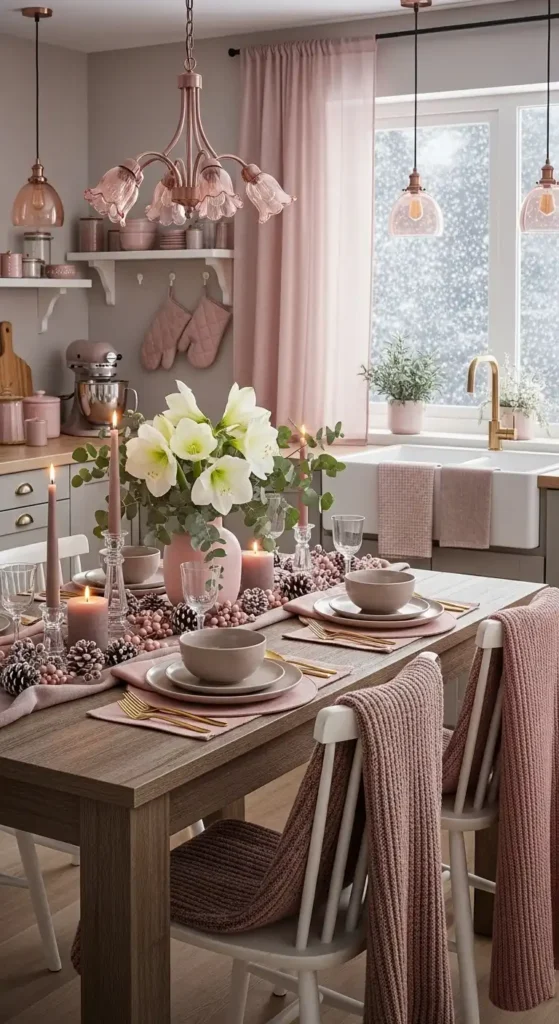
These gentle colors pair exceptionally well with light wood cabinetry and marble surfaces, creating an ethereal, calming environment. By stepping away from heavy reds and greens, you create a winter kitchen decor scheme that feels fresh, airy, and serene, perfect for the quiet months of the new year.
9. Functional Copper Cookware Display
Copper cookware brings a literal glow to the kitchen, radiating a warmth that mimics firelight. Hanging a few copper pots on a rack or displaying a collection of skillets on a shelf adds an instant layer of metallic warmth that stainless steel cannot achieve. The patina that develops over time only adds to the cozy, lived-in aesthetic.
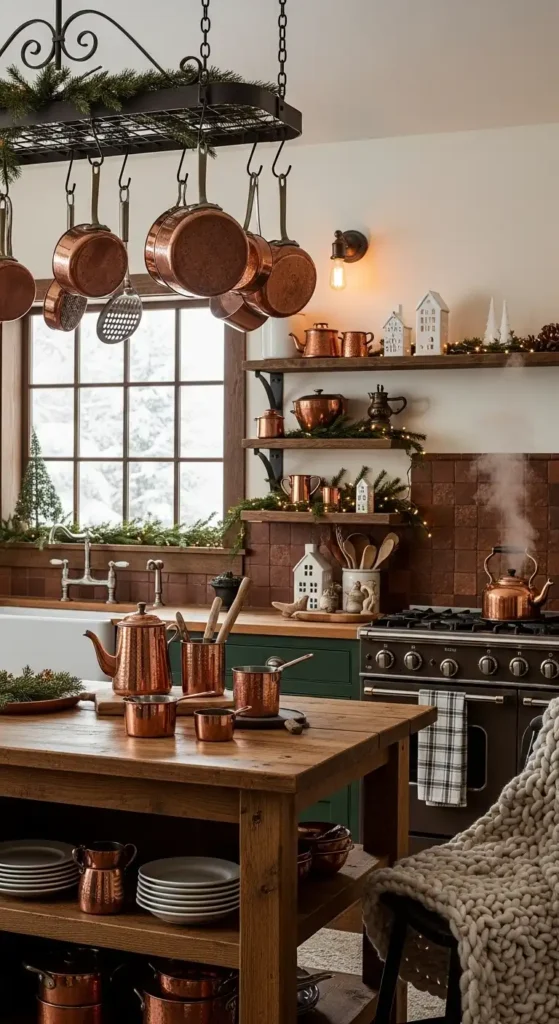
You do not need a full set to make an impact; even a single copper colander filled with onions or a vintage kettle on the stove can serve as a stunning focal point. This metal pairs beautifully with dark cabinet colors like navy or charcoal, creating a striking contrast that feels rich and historically inspired.
10. Winter Berry Branches
Bringing the outdoors in is a timeless design strategy, and nothing captures the season quite like bare branches laden with winter berries. Tall branches of ilex (winterberry) or rose hips make a dramatic statement when placed in a clear glass or white ceramic vase. The vibrant red or orange berries provide a natural pop of color that feels organic rather than manufactured.
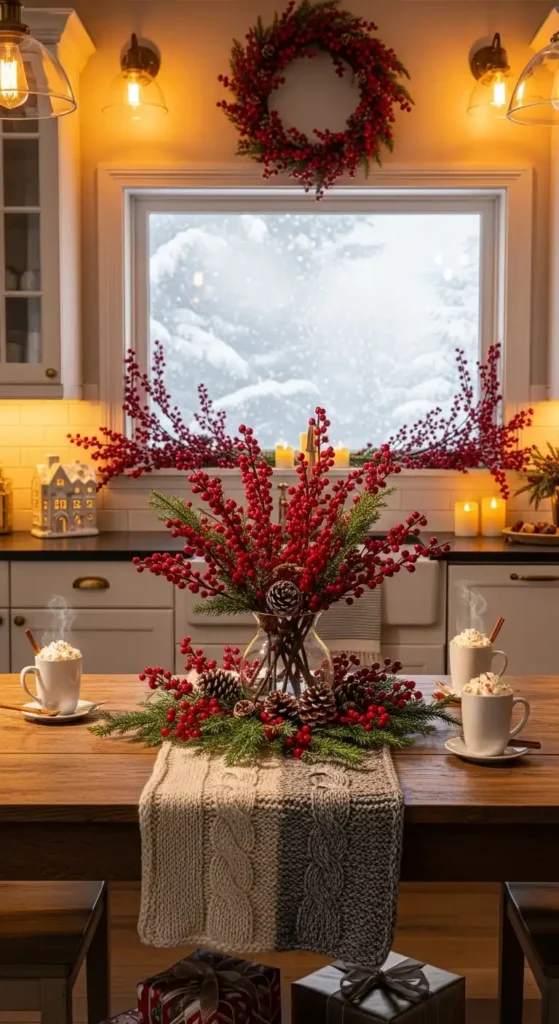
These arrangements are incredibly long-lasting, often surviving for weeks without water changes, making them a low-maintenance option for busy households. Their structural, architectural shape fills vertical space effectively, drawing the eye up and making the kitchen feel taller and more spacious.
11. Soft Linen Tea Towel Drapes
Replacing standard cotton dishcloths with high-quality linen towels creates a subtle upgrade in texture that feels luxurious to the touch. Drape these towels over the handle of the oven, the edge of the sink, or a towel bar to soften the hard industrial lines of appliances. Look for linens in oatmeal, charcoal, or flax tones to maintain a natural, earthy vibe.
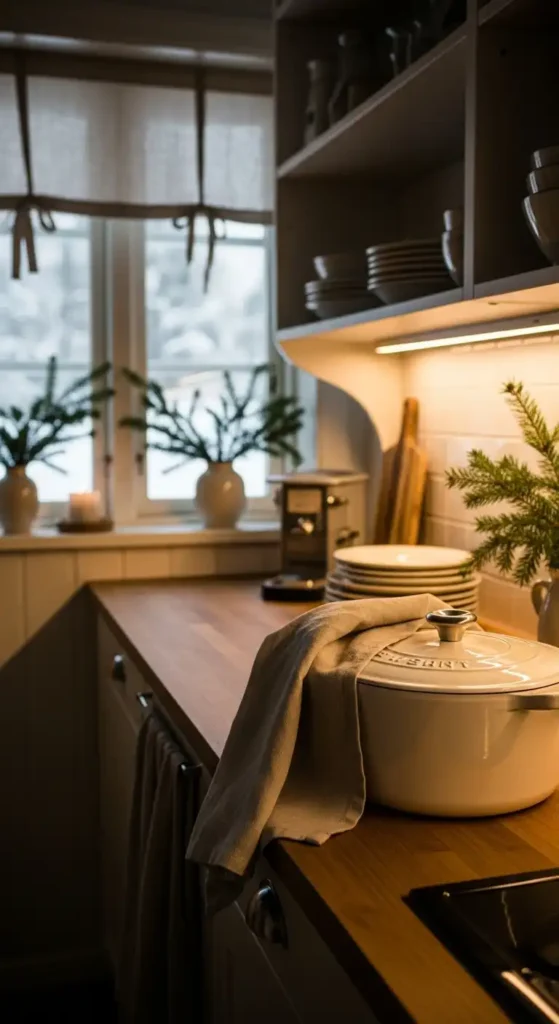
Linen has a unique way of crinkling that looks effortless and casual, contributing to a “slow living” aesthetic. It is highly absorbent and durable, proving that winter kitchen decor can be as practical as it is beautiful. This small textile swap is one of the most affordable ways to change the tactile experience of the room.
12. Rustic Wooden Bowl Centerpieces
An oversized wooden bowl serves as a versatile anchor for a kitchen island or dining table. Fill it with seasonal produce like pomegranates, artichokes, or winter squash to create an edible still life that celebrates the season’s bounty. The wood tone connects with other rustic elements in the room, reinforcing the cozy cabin vibe.
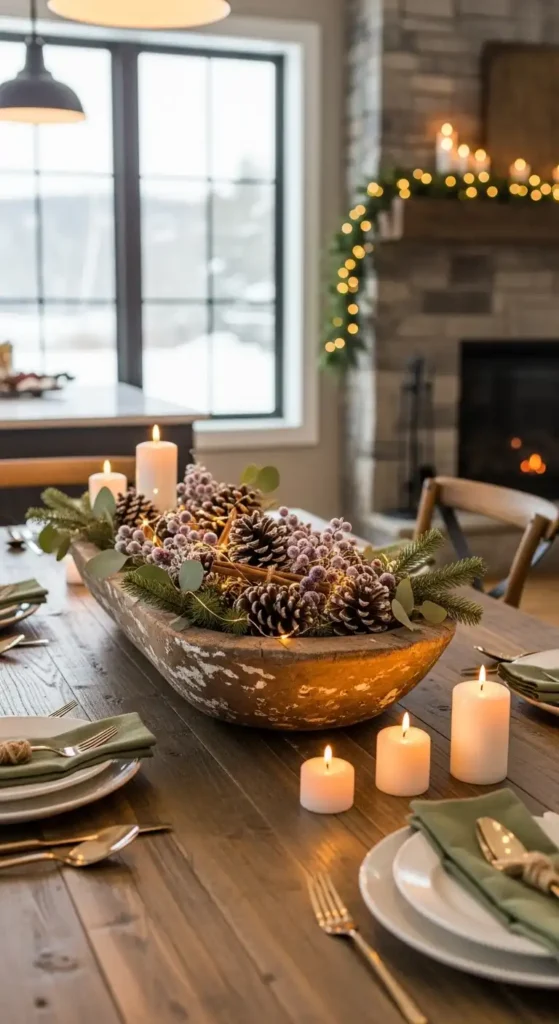
When not filled with produce, the bowl stands alone as a sculptural object, its grain and shape adding interest to flat surfaces. You can also fill it with pinecones or dried moss balls for a more permanent decorative display. This piece invites interaction and adds a sense of abundance to the heart of the home.
13. Candlelit Glass Jar Groupings
Candlelight is essential for combating the gloom of early sunsets, and grouping candles in glass jars creates a safe, contained glow suitable for a cooking space. Use varying sizes of mason jars or recycled glass containers to hold white pillar candles or tealights. The glass protects the flame from drafts and reflects the light, amplifying the cozy ambiance.
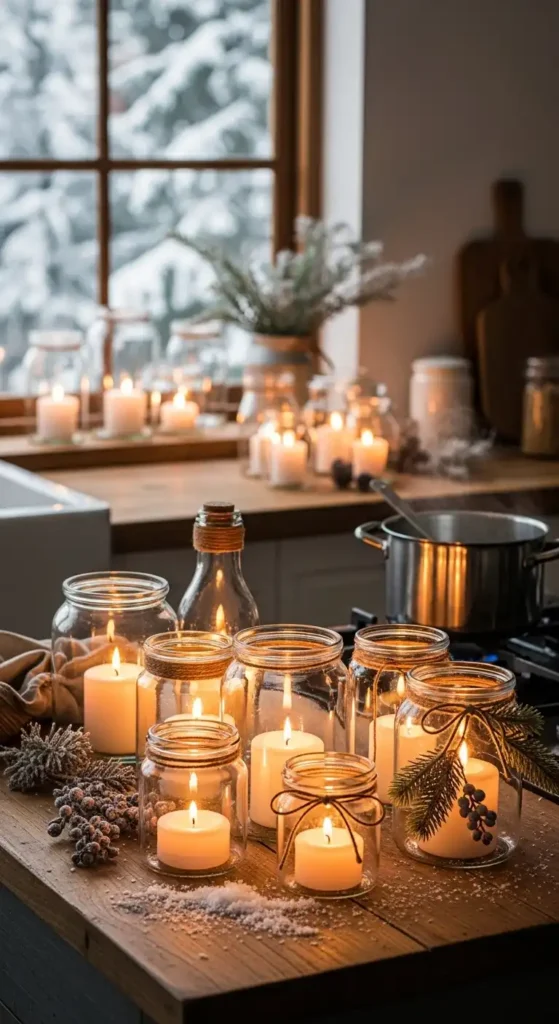
Arrange these clusters on a windowsill, a safe corner of the island, or a dining table to create pockets of warmth. The flickering light reflects off tile backsplashes and cabinet hardware, softening the entire room. Unscented candles are best for the kitchen to avoid clashing with the aromas of cooking food.
14. Woven Basket Storage
Texture is the antidote to the sterile feel of modern kitchens, and woven baskets supply this in abundance. Use large wicker or seagrass baskets to store potatoes and onions in the pantry or on open shelves. Smaller woven trays can corral oils, vinegars, and salt cellars near the stove, keeping countertops tidy while adding visual warmth.

The natural fibers of the baskets introduce a golden, honey-toned hue that warms up white or grey kitchens. They also hide clutter effectively, helping to maintain the peaceful, organized visual field that is so important during the chaotic winter months. This is functional decor at its finest.
15. Persimmon Fruit Accents
Taking a cue from 2025 trends, the bright, dusty orange of persimmons is becoming a major design element in a neutral winter bedroom. A simple bowl piled high with these fruits offers a sophisticated alternative to traditional citrus displays. Their unique shape and matte skin introduce a modern, sculptural accent that feels fresh while still blending beautifully with soft, understated winter tones.
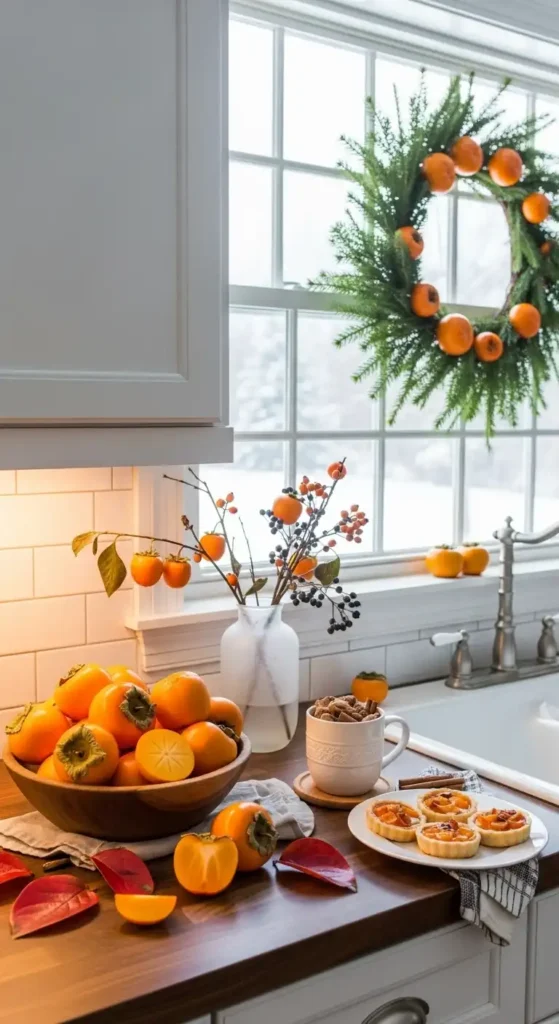
The color of persimmon pairs unexpectedly well with deep blues, jades, and dark woods, acting as a vibrant bridge between autumn and winter styles. As they ripen, they can be eaten, ensuring your decor remains dynamic and ever-changing. It is a minimalist approach to color that packs a significant visual punch.
16. Jade Green Cabinet Contrasts
For those willing to make a bolder change or looking for small accent pieces, jade green is emerging as a top color choice for winter interiors. If painting cabinets is not an option, introduce this soothing, deep green through small appliances, a stand mixer, or ceramic canisters. This color embodies the serenity of evergreen forests and pairs beautifully with brass hardware.
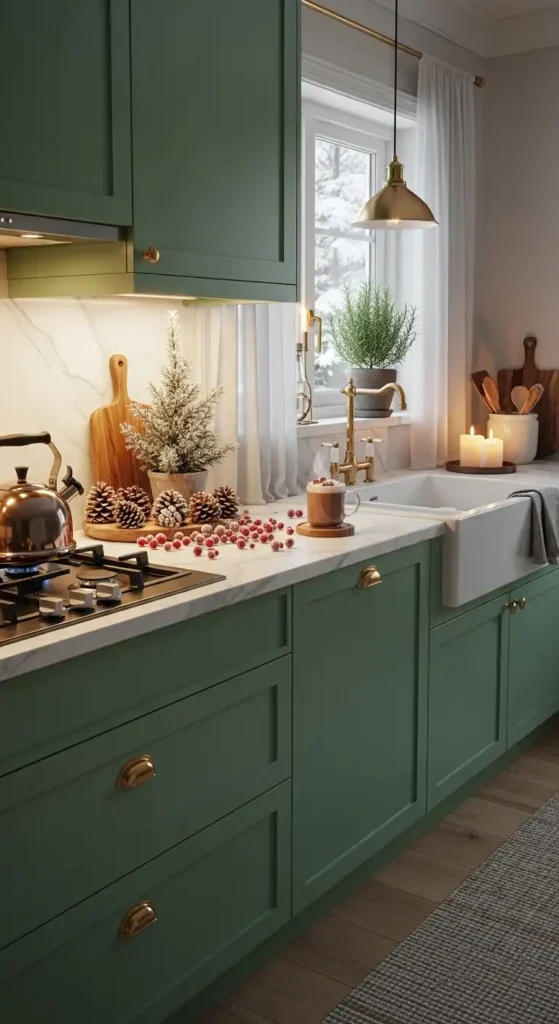
Jade feels more restorative and interesting than standard forest green, offering a complex undertone that shifts with the light. It grounds the space and creates a feeling of permanence and heritage. Adding even a few jade accessories can anchor a neutral kitchen and give it a sophisticated, moody edge suitable for the season.
How Can You Transition This Look Into Spring?
The beauty of a texture-focused winter aesthetic is its inherent versatility when the seasons eventually shift. Because the core elements rely on woods, ceramics, and neutral linens rather than overtly holiday-themed items, transitioning is seamless. You simply swap the heavy velvet ribbons for lighter silk or cotton ties, replace the winter berry branches with budding green stems or tulips, and exchange the faux fur or wool textures for lighter woven cottons.
The foundational layer of warm lighting, organized vignettes, and artisanal pottery remains timeless, allowing your kitchen to evolve slowly and naturally. This approach keeps your space feeling fresh without requiring a complete overhaul every few months.
Conclusion
Creating a sanctuary in your kitchen during the winter months does not require a massive renovation budget or professional skills. It is fundamentally about softening the edges of a utilitarian space and inviting warmth in through small, thoughtful details. By layering textures like wood, linen, and woven fibers, and by paying attention to ambient lighting, you can turn a cold room into the cozy heart of your home.
Ultimately, the best winter kitchen decor is one that serves your lifestyle while soothing your senses. Whether it is a dedicated station for hot drinks that brings the family together or a simple runner rug that makes morning prep work more comfortable, these changes have a tangible impact on daily life. Embrace the season by making your kitchen a place where you genuinely want to linger, cook, and connect.
FAQs
What are the best colors for winter kitchen decor?
Warm neutrals like oatmeal, taupe, and mushroom gray work beautifully, as do deep accents like navy, forest green, burgundy, and the trendy jade green.
How do I make a white kitchen feel cozy in winter?
Introduce texture through wooden cutting boards, woven baskets, and runner rugs. Add ambient lighting with countertop lamps to soften the bright white surfaces.
Can I use fresh flowers for winter decor?
Yes, but choose winter-hardy varieties like hellebores, amaryllis, or paperwhites. Structured greenery like eucalyptus, pine, and olive branches also lasts longer and looks seasonal.
Is it safe to use rugs in the kitchen?
Yes, provided you choose a low-pile, washable rug or a durable indoor/outdoor material. Ensure it has a non-slip pad to prevent accidents in high-traffic cooking zones.
How can I decorate my kitchen island for winter?
Create a central vignette using a large wooden bowl filled with seasonal fruit, a cluster of candle jars, or a tall vase with bare branches. Keep it simple to maintain workspace utility.