
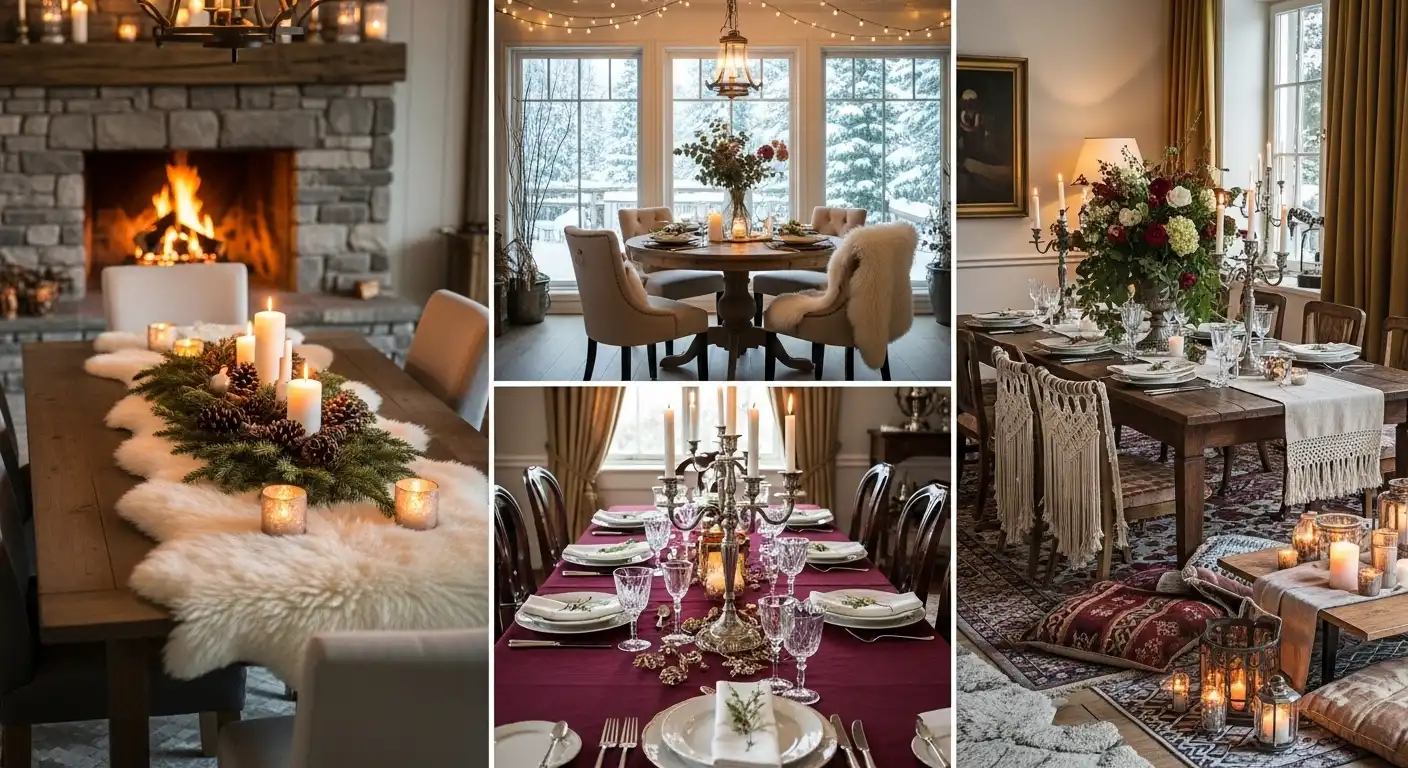
17 Cozy Winter Dining Room Ideas to Warm Up Your Home
As the temperatures drop and the days grow shorter, our instinct to hibernate kicks in, making the home a primary source of comfort. Creating a cozy winter dining room atmosphere is about more than just turning up the thermostat; it is about crafting a sanctuary where long meals and warm conversations can unfold. A few thoughtful adjustments can transform a cold, utilitarian space into a snug retreat that welcomes family and friends to linger a little longer.
The transition to the colder months offers a perfect excuse to layer textures, play with lighting, and introduce organic elements that celebrate the season. You do not need a complete renovation to achieve this inviting vibe; often, it is the small, sensory details that make the biggest difference. By focusing on warmth, softness, and ambient glow, you can curate a dining room aesthetic that feels both stylish and deeply restorative.
17 Cozy Winter Dining Room Styling Trends for a Stylish Home
Embracing the season means bringing warmth and character into your eating area through strategic decor choices. Whether you prefer a rustic farmhouse look or a modern minimalist approach, these ideas focus on creating harmony and flow while keeping the chill at bay.
1. Velvet Upholstered Seating
Swapping out cold metal or wood chairs for velvet upholstery immediately softens the room’s acoustic and visual appeal. Deep jewel tones like emerald green, navy, or burgundy add a rich sense of luxury that feels particularly appropriate during the colder months. If buying new chairs isn’t an option, consider velvet seat cushions or slipcovers to achieve the same effect. The plush texture provides physical warmth, making guests feel hugged by the room the moment they sit down.
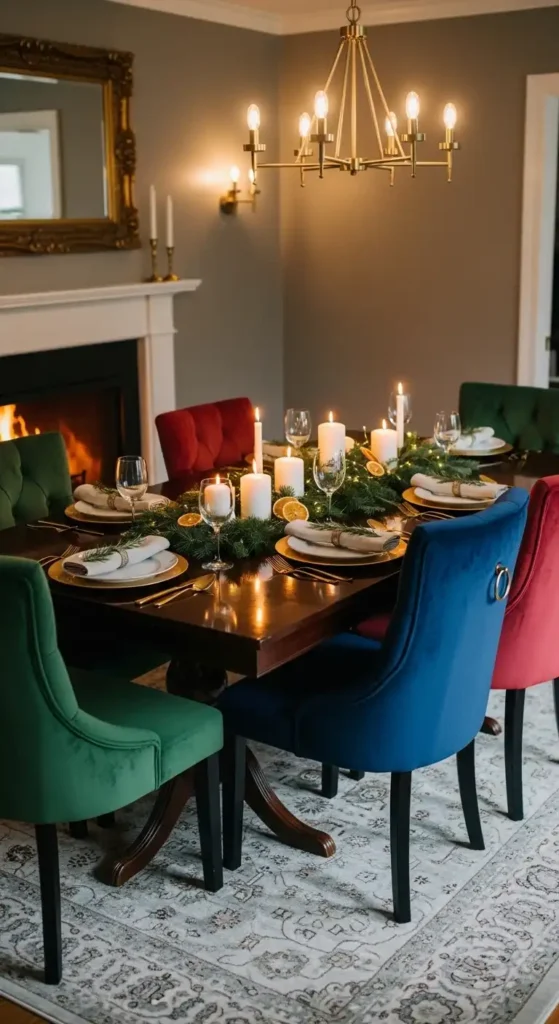
Beyond just comfort, velvet catches the light beautifully, adding depth to a cozy winter dining room setting. When paired with darker wood tones, the fabric creates a moody, intimate vibe perfect for evening dinner parties. To keep the look balanced, mix these heavier textures with lighter elements like glass or polished metal on the tabletop.
2. Layered Wool and Jute Rugs
Cold floors can instantly sap the warmth from a room, so layering rugs is a practical and stylish solution. Start with a large, durable jute or sisal rug as your base to define the dining area and add natural texture. Top this with a slightly smaller, softer wool or vintage-style rug in warm hues to introduce pattern and softness underfoot. This “rug-on-rug” technique traps heat and adds a bohemian, collected flair to the space.
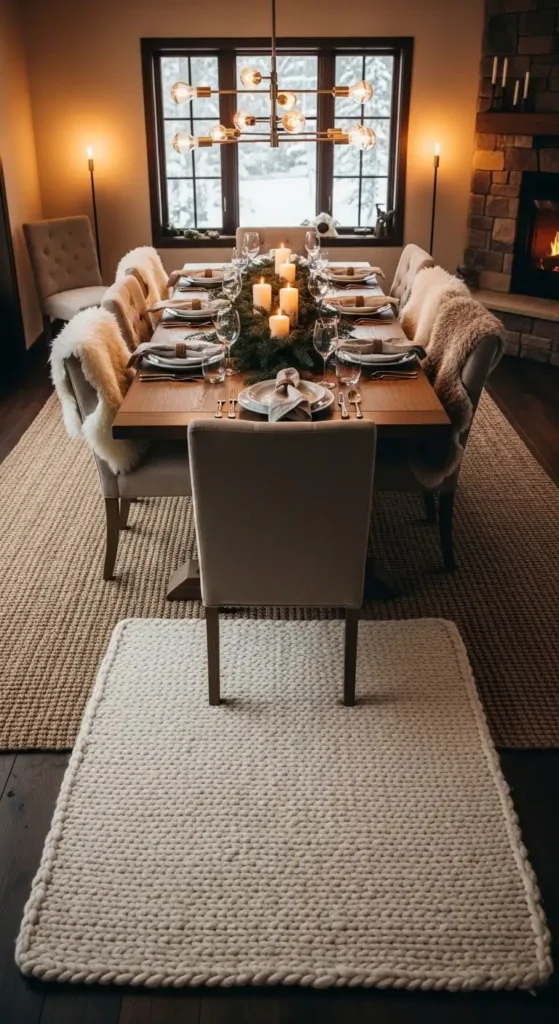
The visual weight of layered rugs grounds the furniture, preventing the table and chairs from feeling like they are floating in a cavernous room. It creates a dedicated zone of warmth that invites people to take off their shoes and relax. Ensure the top rug is flat enough to allow chairs to slide easily while still providing that essential barrier against the winter chill.
3. Ambient Candlelight Clusters
Lighting is the most critical element in setting a mood, and nothing beats the flicker of real flame. Instead of a single centerpiece, create a sprawling cluster of pillar candles in varying heights across a runner or tray. Mixing white, cream, and beeswax candles adds subtle color variation, while the collective glow mimics the warmth of a fireplace. This arrangement lowers the visual center of the room, drawing eyes down to the table and fostering intimate conversation.
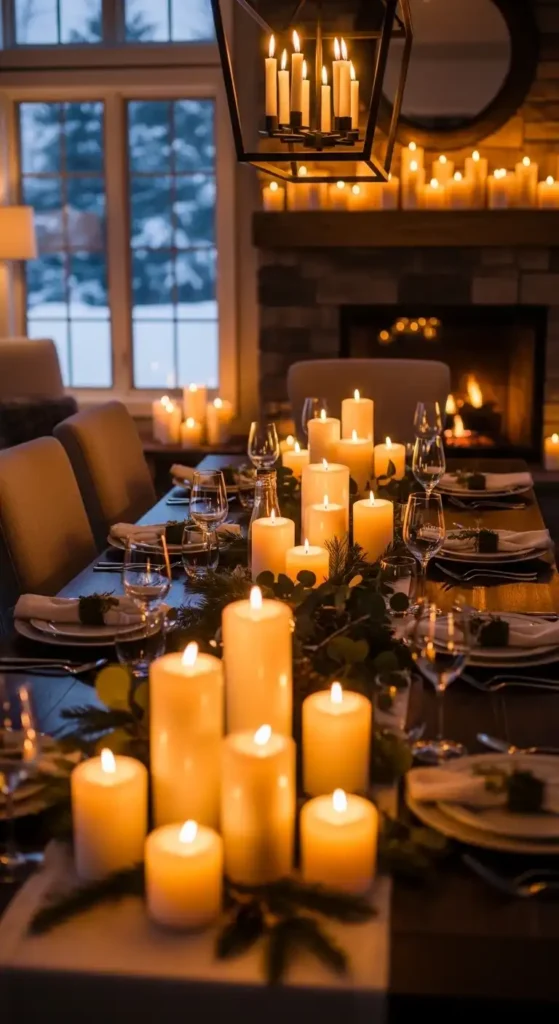
For a safer but equally atmospheric alternative, high-quality flameless candles with realistic wicks work wonders, especially in busy households. Interstices the candles with small sprigs of greenery or pinecones to integrate them into the dining room theme. The key is abundance; three candles look nice, but twelve candles create an experience.
4. Sheepskin Throws
Draping sheepskin or faux fur throws over the backs of dining chairs adds an instant layer of Scandinavian “hygge.” This look is effortlessly chic and serves a dual purpose: it softens the hard lines of wooden furniture and offers extra warmth for diners’ backs. The texture breaks up the monotony of matching dining sets, giving the room a more relaxed, lived-in quality that feels welcoming rather than formal.
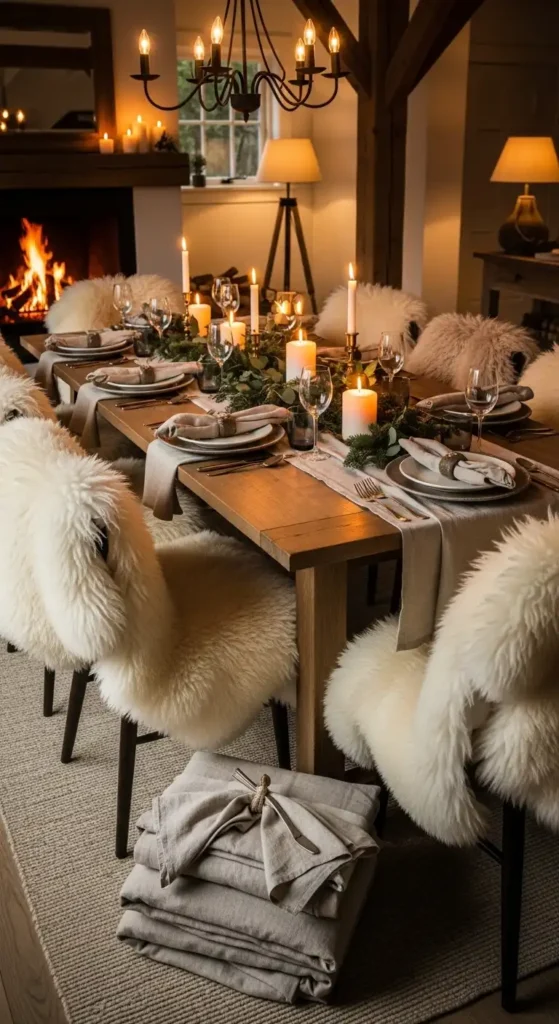
You can also place a sheepskin on a dining bench to make shared seating more comfortable and inviting. The white or cream fur contrasts beautifully with dark timber tables, brightening the space on gloomy winter days. It is a simple, reversible styling trick that transforms a summer dining set into a winter haven in seconds.
5. Dried Citrus Garlands
Bring a touch of nostalgic charm and natural color to your space with handmade dried citrus garlands. Slices of orange, lemon, and grapefruit, when dried, become translucent like stained glass and emit a faint, spicy scent. Strung together with twine, they can be draped over a mirror, wound around a chandelier, or laid down the center of the table as a runner.
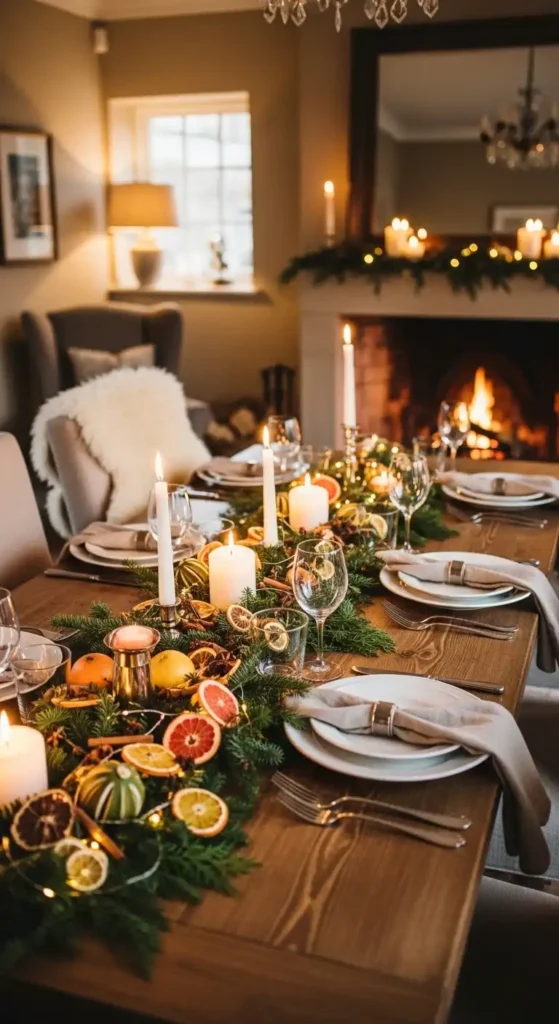
The warm amber and yellow tones of the fruit complement the neutral palette often used in cozy winter dining room decor. Unlike fresh flowers that wilt quickly in heated rooms, dried citrus lasts the entire season. Pair the garland with cinnamon sticks or bay leaves to enhance the sensory experience and add an organic, rustic element to your design.
6. Rustic Wood Dough Bowls
A large, hand-carved wooden dough bowl makes for a stunning, low-profile centerpiece that does not block conversation across the table, making it perfect for Valentine’s living rooms. Fill it with seasonal elements like oversized pinecones, moss balls, or white pumpkins to create a textured focal point. The raw wood grain adds an earthy, grounding touch that connects the interior with the dormant nature outside.
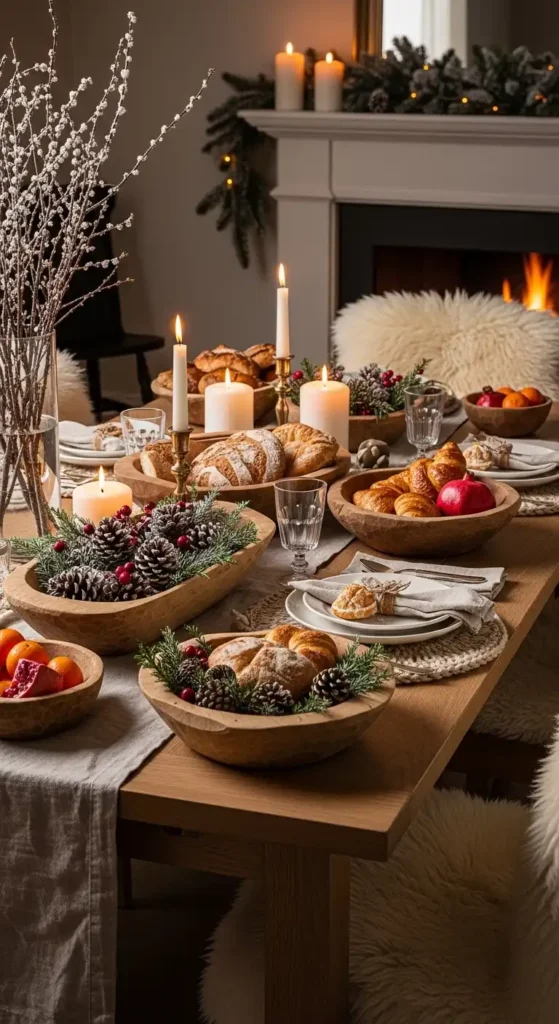
You can easily update the bowl’s contents as winter progresses, transitioning from holiday greens to late-winter dried hydrangeas or bleached wheat sheaves. This versatility makes it a staple for any dining room design. Place the bowl on a linen runner to protect the table and add another layer of softness to the vignette.
7. Plaid Table Textiles
Plaid patterns evoke an immediate sense of heritage and warmth, reminiscent of woolen blankets and winter cabins. Introduce this pattern subtly through napkins, a table runner, or even a tablecloth in muted tones like slate grey, forest green, or cocoa brown. The structured grid of the plaid contrasts nicely with organic centerpieces, creating a balanced and visually interesting tablescape.
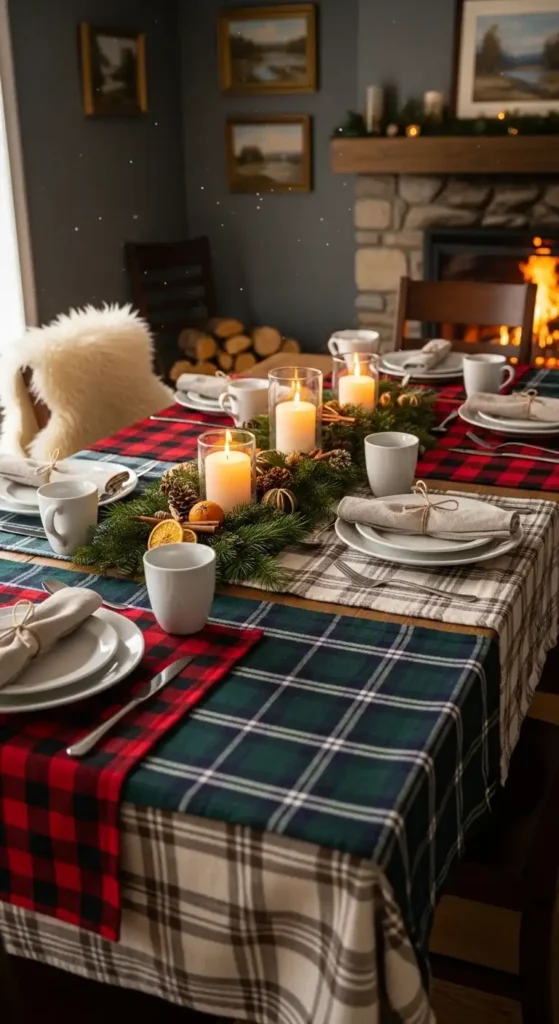
Avoid overly bright red and green plaids if you want the look to last beyond the holidays; instead, opt for “winter neutrals” that feel appropriate from November through February. Mixing a plaid runner with solid-colored stoneware plates creates a sophisticated, layered look. This traditional pattern anchors the table, making it feel like the heart of the home.
8. Statement Brass Chandeliers
Winter days are dark, making your choice of overhead lighting crucial for maintaining a warm atmosphere. A brass or gold-toned chandelier adds a metallic warmth that reflects light beautifully, even when the fixture is dimmed. The golden hue of the metal combats the cool, blue light of winter afternoons, injecting a sunny glow into the space.
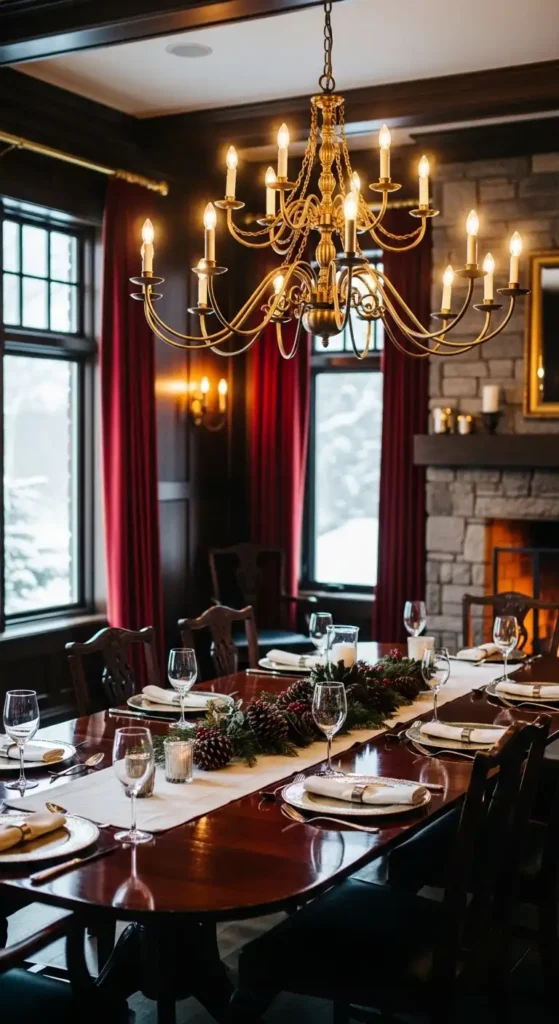
Consider a fixture with multiple bulbs or a dimmer switch to control the intensity of the light. Soft, warm-white bulbs are non-negotiable for a dining room vibe; cool daylight bulbs will make the room feel clinical. The brass fixture acts as the “jewelry” of the room, drawing the eye upward and adding a touch of elegance to the rustic winter decor.
9. Winter Greenery Branches
For a dramatic yet minimalist impact, place tall branches of winter greenery like cedar, pine, or juniper in a heavy ceramic vase or demijohn. The height adds architectural interest to the room and draws the eye upward, making the ceiling feel higher. Unlike elaborate floral arrangements, these structural branches feel wild and gathered, bringing the raw beauty of the winter landscape indoors.

The scent of fresh evergreen is an added bonus, subtly perfuming the dining room without the need for artificial air fresheners. To keep the look modern, stick to one type of greenery per vase rather than a mixed bouquet. This simple inclusion of life is essential for a dining room aesthetic that feels fresh rather than stagnant.
10. Moody Wall Colors
If you are open to painting, enveloping your dining room in a deep, moody hue can instantly make the space feel smaller and more intimate. Colors like charcoal, navy, espresso, or forest green absorb light rather than reflecting it, creating a cocoon-like effect. This backdrop allows your warm wood furniture and brass accents to pop, creating a striking contrast.

For a less permanent option, consider a removable wallpaper with a dark, botanical print on a single feature wall. The darkness recedes, blurring the corners of the room and focusing attention on the illuminated table. This bold choice defines the dining area as a distinct destination for evening gatherings, separating it from the brighter, more active parts of the house.
11. Knitted Pillow Accents
Incorporate the texture of your favorite winter sweater into your dining space with chunky knit throw pillows. Place one on each captain’s chair or scatter them along a dining bench to invite guests to settle in. The visual cue of the knitting implies warmth and care, reinforcing the cozy winter dining room theme.

Stick to monochromatic tones like cream, oatmeal, or soft gray to keep the texture as the main attraction. These pillows not only add physical comfort but also absorb sound, reducing the echo that can occur in dining rooms with hard surfaces. It is a soft, tactile addition that makes a rigid dining chair feel like a lounge chair.
12. Vintage Brass Candlesticks
Collecting mismatched vintage brass candlesticks creates a sense of history and permanence on your dining table. The patina of old brass feels warmer and more authentic than shiny, new gold finishes. Group them in odd numbers, three, five, or seven, for a casual, collected look that doesn’t feel too contrived or perfect.

Pair these holders with taper candles in unexpected winter shades like taupe, terracotta, or beeswax yellow. The varying heights of the candlesticks add vertical interest to the table without blocking sightlines. This timeless decor element bridges the gap between special occasions and everyday dinners, ensuring your dining room style is always ready for a meal.
13. Stoneware Crockery Display
Switching your delicate porcelain for hearty, thick-walled stoneware changes the entire feel of the meal. Display stacks of speckled stoneware plates and bowls on a sideboard or open shelving to add visual weight and texture to the room. The imperfect, organic shapes of hand-thrown pottery feel grounded and substantial, perfect for hearty winter stews and roasts.
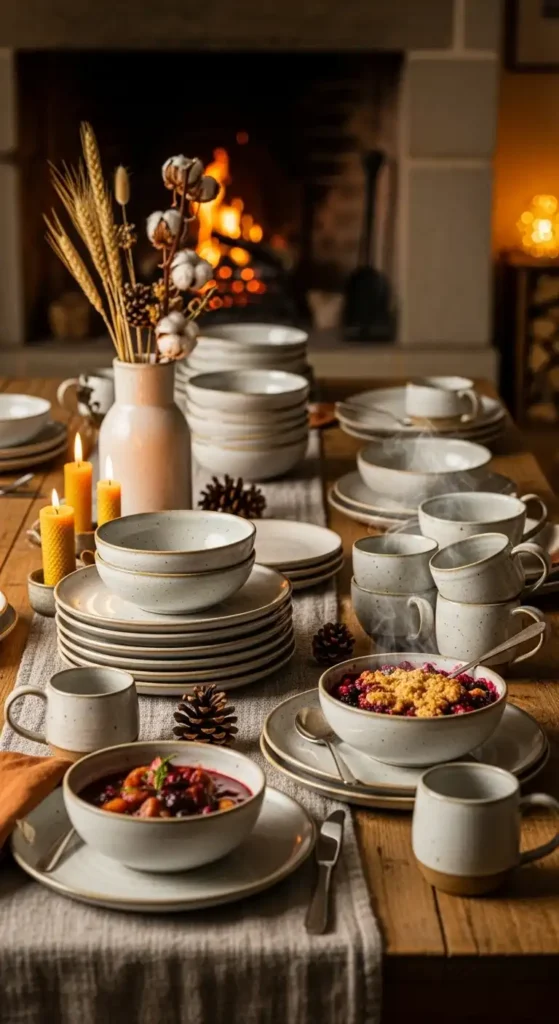
Earthy glazes in moss green, stone gray, or mushroom brown complement the season’s color palette, making them a lovely touch for creative diy Valentine’s Day date ideas at home. Even when not in use, a stack of beautiful bowls serves as decor. This functional art adds a layer of artisanal charm, suggesting that this is a home where food is prepared with love and served with care.
14. Forced Bulb Centerpieces
While winter is dormant outside, you can bring the promise of spring to your table with forced bulbs like paperwhites or amaryllis. Planting them in clear glass vessels with stones allows you to see the roots growing, adding a fascinating natural element to your decor. The bright white blooms provide a fresh, crisp contrast to the heavier wools and woods typical of winter styling.
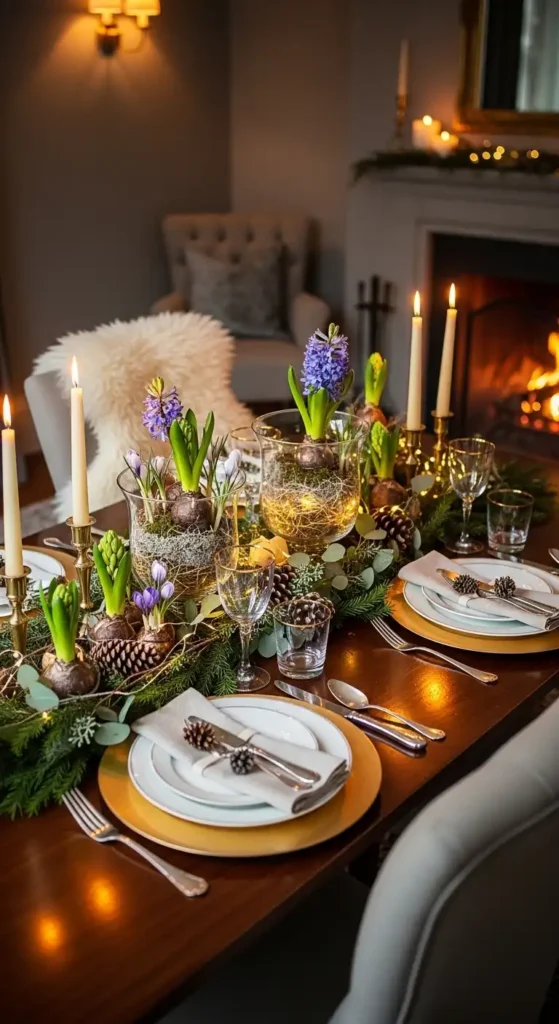
These living centerpieces grow and change daily, providing a dynamic element to your cozy winter dining room setup. They thrive in the indirect light of a dining room and require minimal care. The towering stems of an amaryllis can serve as a dramatic focal point, proving that winter decor doesn’t always have to be about dried or dead things.
15. Window Wreaths
Hanging simple wreaths in the windows adds a festive touch that can last well beyond December. Opt for wreaths made of olive branches, eucalyptus, or preserved boxwood for a look that is seasonal but not holiday-specific. Suspended by a velvet or grosgrain ribbon, these wreaths frame the view of the outdoors, connecting the warm interior with the cold exterior.

This vertical styling draws the eye to the windows, making the room feel taller and more complete. It is a great way to decorate a small dining room where table space might be limited. The greenery against the glass creates a beautiful silhouette at night, enhancing the feeling of being safely tucked away inside a dining room retreat.
16. Basket Weave Pendants
For a more rustic or bohemian winter look, consider swapping a glass fixture for a woven basket pendant. The texture of rattan, wicker, or bamboo adds immediate warmth to the ceiling plane, which is often neglected. When lit, the weave casts intricate, warm shadows on the walls, adding pattern and movement to the room without the need for wallpaper.
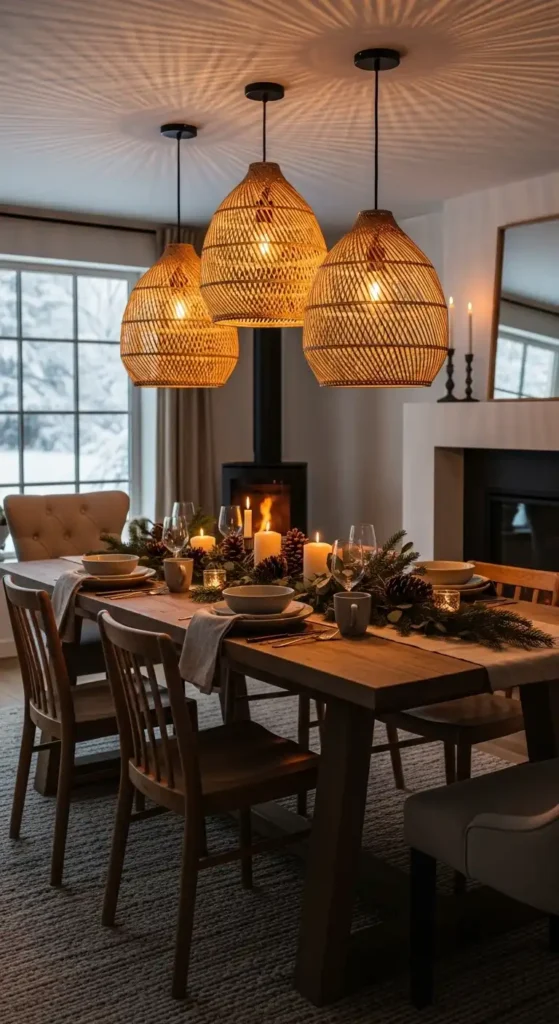
The natural material softens the hard edges of a dining table and pairs beautifully with other wood tones in the room. It acts as a visual anchor, bringing the scale of the room down to a more human, intimate level. This organic touch balances the heaviness of winter fabrics, keeping the room feeling airy yet cozy.
17. Rolling Bar Cart Station
A well-stocked bar cart in the corner of the dining room suggests hospitality and warmth. Style it with amber-colored bottles, crystal decanters, and a bowl of fresh citrus or nuts. The glint of glass and liquid adds sparkle to a dark corner, acting as a mini-destination within the room.

Functionally, it keeps beverages close at hand so hosts don’t have to leave the warm room to refill glasses. Drape a small tea towel over the handle and add a small lamp to the cart to integrate it into the room’s lighting scheme. It is a sophisticated nod to entertaining that makes any cozy winter dining room gathering feel like a special occasion.
How to Maintain a Winter Look Without It Feeling Cluttered?
The line between “cozy” and “cluttered” can be thin, especially when adding layers of textiles and decor. The secret lies in editing your existing items before adding new seasonal touches; remove summer vases, lightweight linens, and excess knick-knacks to create breathing room for your winter elements. Focus on a cohesive color palette of three to four shades (e.g., cream, wood, brass, forest green) to ensure that even with multiple layers, the visual noise remains low and the atmosphere stays serene.
Conclusion
Transforming your eating area into a warm sanctuary does not require a complete overhaul, but rather a shift in focus toward texture, lighting, and warmth. By incorporating elements like velvet seating, ambient candlelight, and natural greenery, you create a space that feels physically and emotionally insulating against the cold. A cozy winter dining roomcozy winter dining room design invites you to slow down, savor your meals, and enjoy the company of loved ones in an environment that feels safe and grounded.
Ultimately, the most important aspect of winter decor is how it makes you feel when you walk into the room. Whether you choose to layer rugs for warmth or simply add a few brass candlesticks for a golden glow, the goal is to build a backdrop for memories. As the snow falls or the wind howls outside, your dining room will stand as a warm, inviting heart of the home, ready to comfort and sustain you until spring returns.