
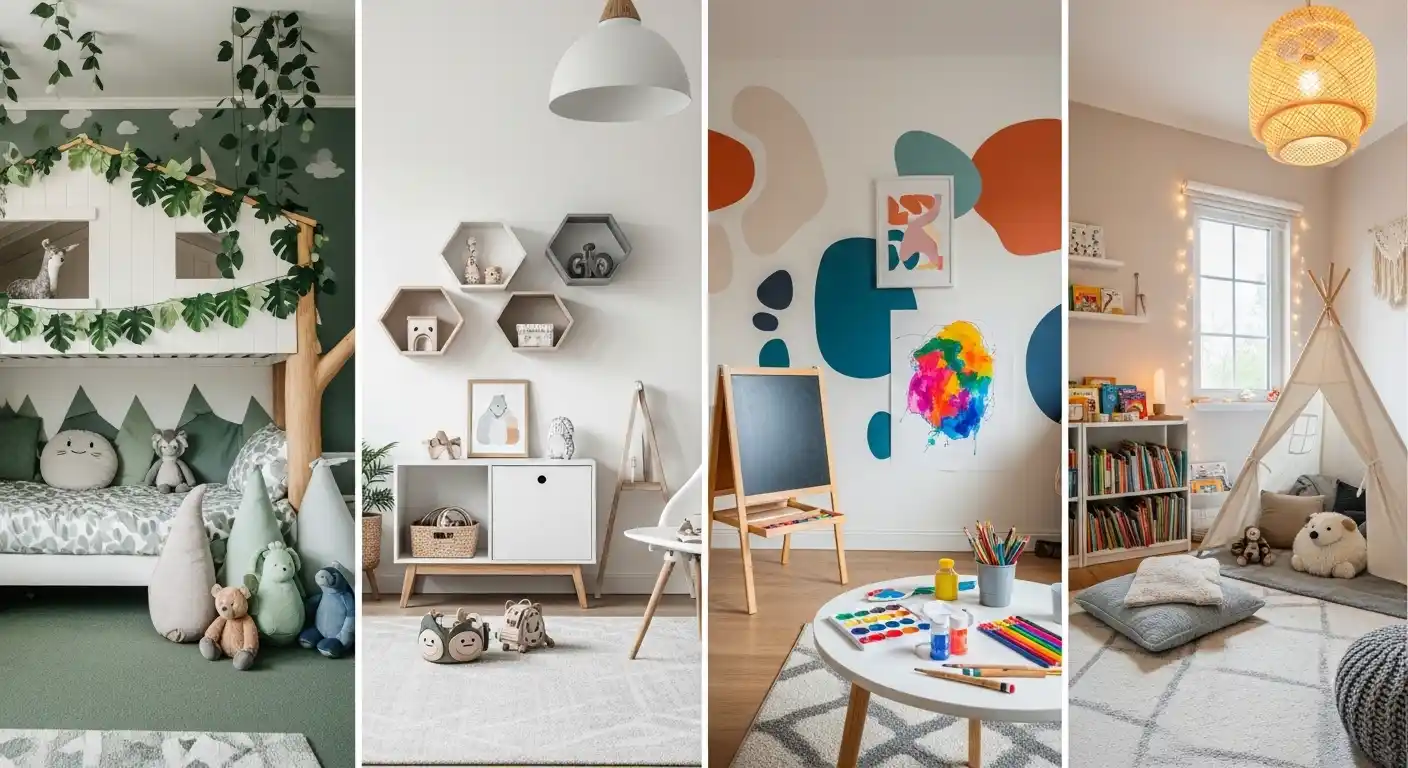
17 Amazing Kids Play Room Ideas That Boost Creativity and Joy
Many parents struggle with creating a kids’ playroom that is both fun and organized. Toys often end up scattered everywhere, small spaces feel cramped, and the room may lack features that stimulate creativity and learning. Without careful planning, play areas can quickly become chaotic, leaving children bored and parents frustrated.
These 17 amazing kids play room ideas provide practical solutions to these common problems, showing how to maximize space, incorporate engaging activities, and keep everything tidy. From clever storage hacks to playful design elements, each idea is designed to create a joyful and inspiring environment where children can explore, learn, and have fun, while parents can enjoy a well-organized and stress-free space.
17 Fun Kids Play Room Ideas to Inspire Creativity and Learning
Design a kids’ playroom that sparks both creativity and learning. Bright colors, playful furniture, and interactive toys make the space inviting. Organizing zones for different activities helps keep things tidy. These ideas create a fun and engaging environment for children.
1. Color-Coded Toy Storage
Using color-coded bins and shelves is one of the best Kids Play Room Ideas to help children easily identify where each toy belongs. Assigning specific colors to different toy categories, like red for blocks and blue for art supplies, encourages independence and teaches organization skills. This system turns cleanup into a fun activity rather than a chore, while keeping the playroom visually appealing.
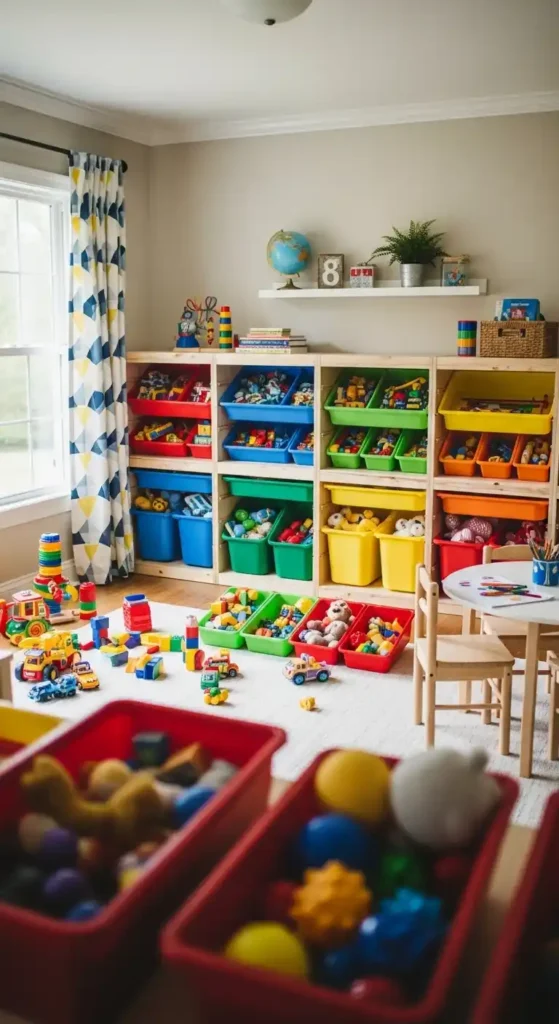
Adding labels with pictures or words makes the system even more intuitive for younger kids who are learning to read. The bright colors add a playful energy to the room, while parents benefit from knowing exactly where everything is. This approach simplifies organization and makes maintaining a tidy space much easier over time.
2. Interactive Wall Panels
Installing interactive wall panels, such as chalkboards, magnetic boards, or textured sensory boards, sparks creativity and hands-on learning. Children can draw, experiment, or solve puzzles independently, which promotes critical thinking and fine motor development. Panels at different heights allow the room to cater to children of various ages.
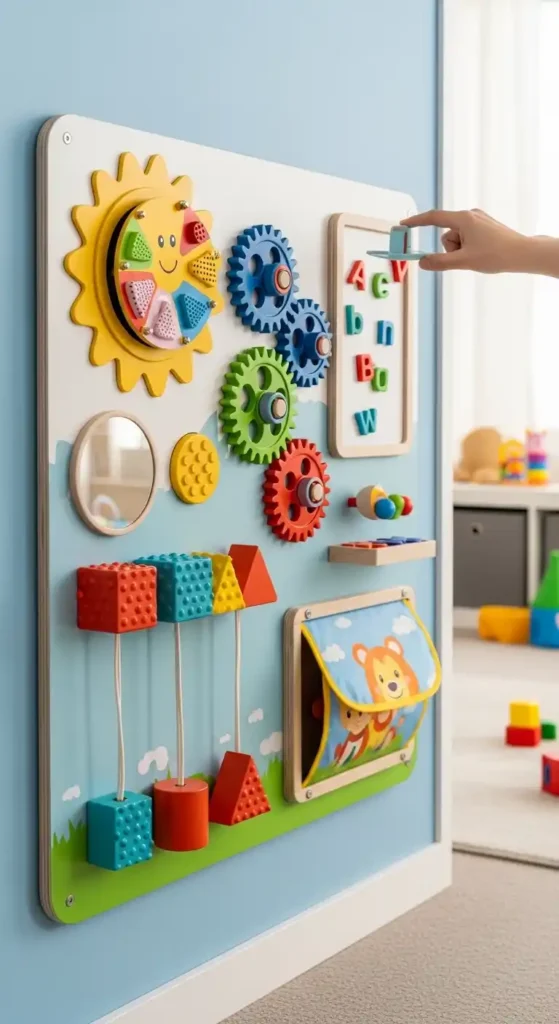
Vertical play also saves floor space, keeping the room uncluttered and functional. Rotating the activities or adding seasonal panels can keep the wall interesting. Parents enjoy watching children engage creatively while maintaining order, and kids develop confidence through self-directed play.
3. Reading Nooks
Creating a cozy reading nook with soft cushions, small shelves, and gentle lighting encourages children to develop a love for books. Placing the nook in a quiet corner with colorful accents makes it inviting and comfortable, giving kids a space to relax and focus. This area becomes a retreat for both solo reading and shared storytelling.
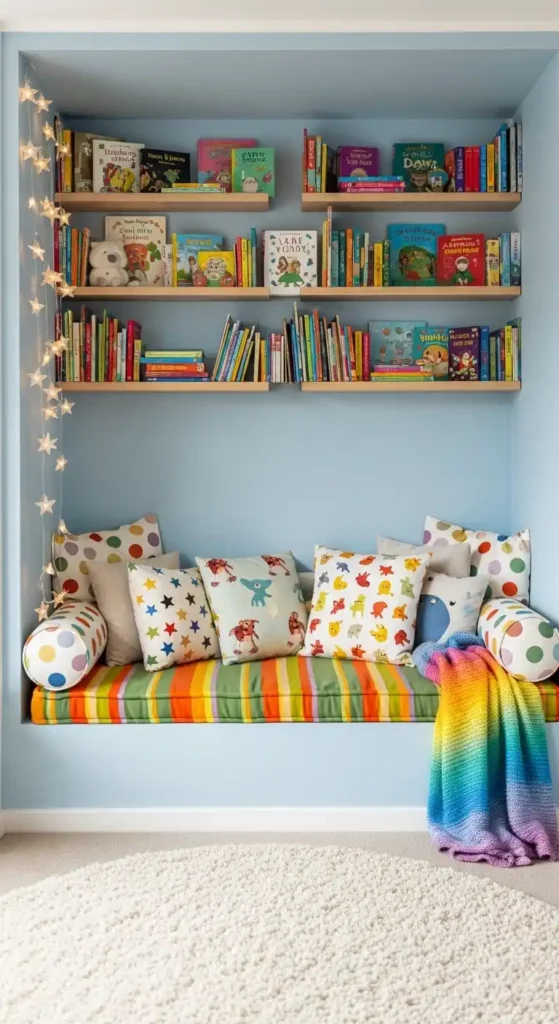
Adding themed decorations, such as forest, ocean, or space motifs, enhances imagination and makes reading feel like an adventure. Parents can use the Nook for interactive reading sessions, building literacy skills, and bonding with their children. A small rug or floor mat defines the space and makes it feel like a dedicated zone for quiet activity.
4. Mini Art Station
A dedicated art station with an easel, a washable table surface, and organized art supplies encourages creative expression while minimizing mess. Children can paint, draw, or craft independently, and displaying their finished artwork nearby promotes a sense of pride and accomplishment.
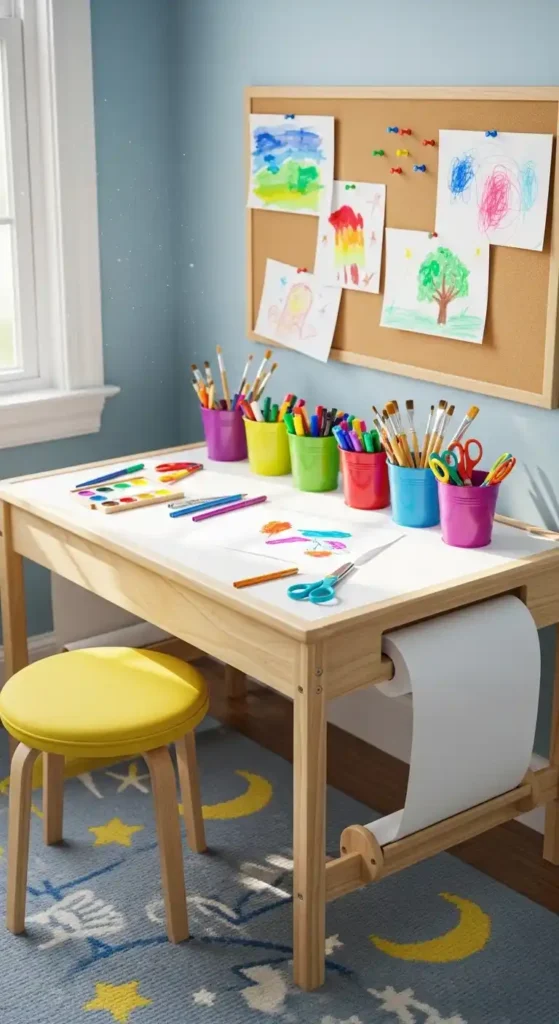
Containing messy projects to one corner keeps the rest of the room clean and organized. Rotating art supplies or introducing seasonal craft kits keeps activities fresh and exciting. Parents benefit from having a designated area where kids can explore creativity safely and without constant supervision.
5. Indoor Climbing Wall
Adding a small indoor climbing wall with safe grips and padded flooring promotes physical activity and helps develop strength, coordination, and balance. Children enjoy challenging themselves, building confidence while staying active indoors, even on rainy days.
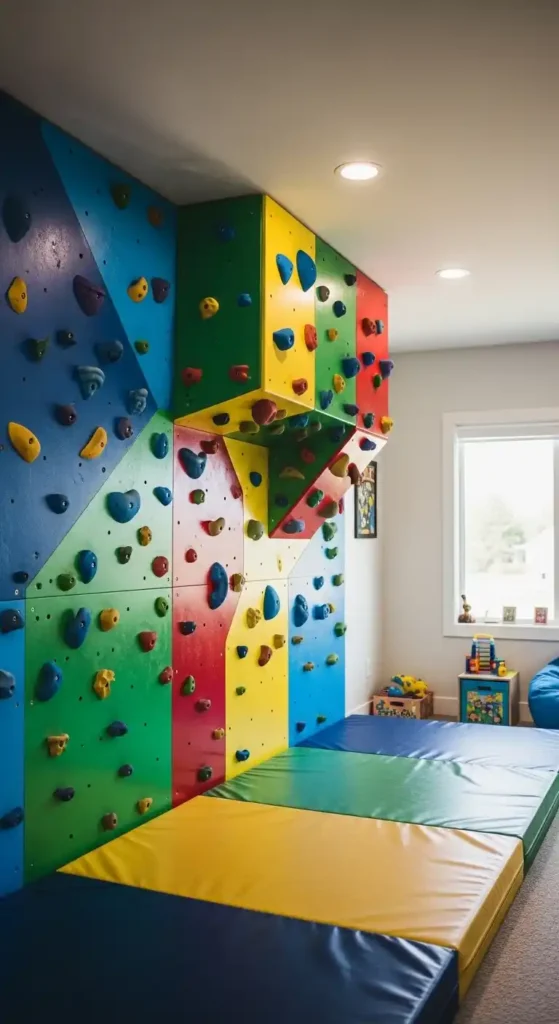
The wall can be adjusted as kids grow, making it a feature that evolves over time. Parents appreciate that children can burn energy safely within the playroom. Proper supervision and padding ensure safety, while climbing activities also support motor skill development and problem-solving.
6. Themed Play Areas
Designing play areas with specific themes, such as a pirate ship, fairy garden, or space station, sparks imaginative role-playing and storytelling. Separating the room into themed zones also helps organize toys and props associated with each theme, creating a sense of structure within the space. Incorporating bright colors and playful elements aligns well with cheerful Spring Home Decor, bringing a fresh and lively vibe to kids’ rooms.
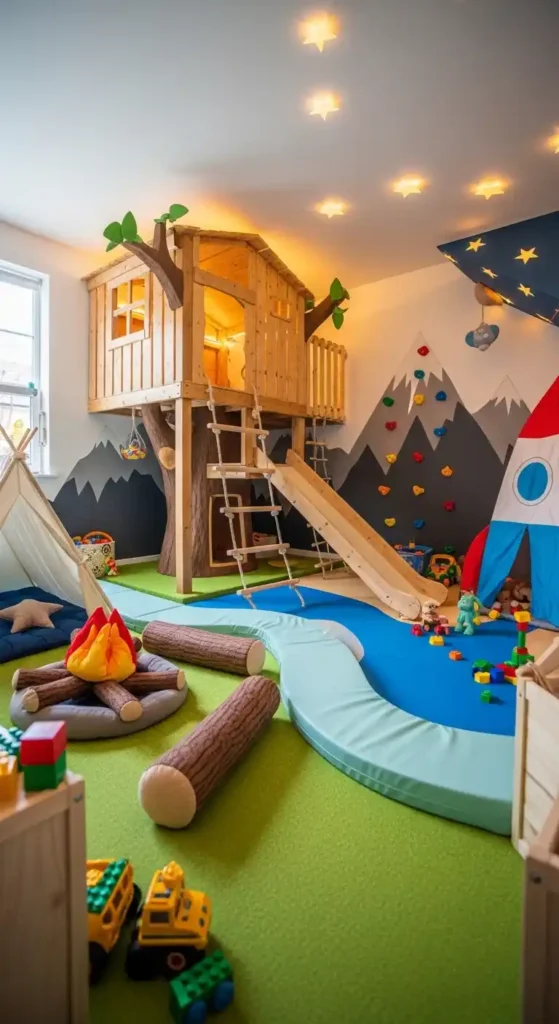
Rotating themes periodically keeps the room exciting and introduces new learning opportunities. Parents can participate in themed games and storytelling, strengthening connections with children. Attention to small details, like rugs, wall decals, and props, enhances immersion and makes imaginative play more engaging.
7. Multi-Level Furniture
Furniture with multiple levels, such as loft beds, bunk beds, or stacked shelving units, maximizes vertical space in smaller rooms. Children can climb, hide, or use the area underneath for storage or play, creating multiple functional zones in one space.
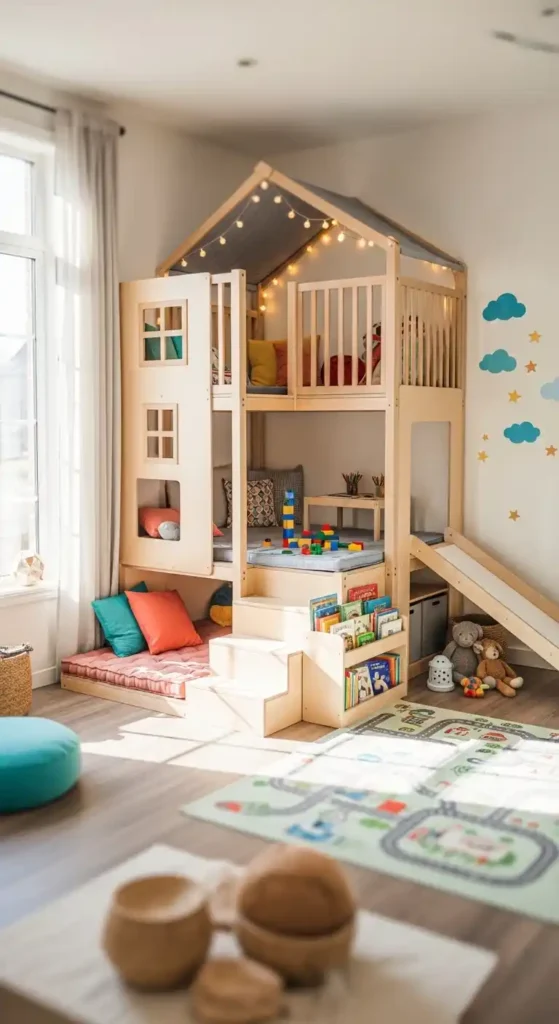
Multi-level furniture adds an element of adventure to the room, making it more engaging and dynamic. It provides practical storage solutions while keeping the floor uncluttered. Parents can efficiently store toys and supplies while offering children a stimulating, fun environment.
8. Sensory Play Corner
A sensory corner featuring tactile toys, textured mats, water or sand tables, and interactive bins promotes exploration and cognitive development. Sensory play encourages fine motor skills, spatial awareness, and problem-solving while offering a calming, engaging activity for children.
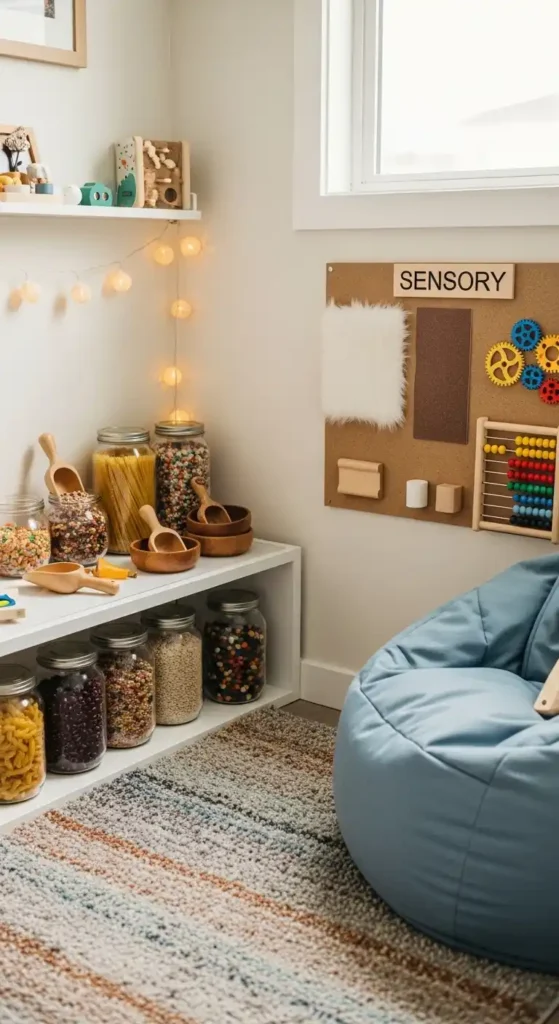
Rotating materials or adding new textures keeps the sensory corner interesting and educational. This area provides children with a structured environment for safe exploration. Parents benefit from having a dedicated space for sensory learning, reducing clutter, and encouraging independent play.
9. Chalkboard or Whiteboard Walls
Painting a wall with chalkboard or whiteboard paint transforms it into a versatile, creative, and learning surface. Children can practice drawing, writing, or solving puzzles while standing and moving around, which adds an interactive element to play.
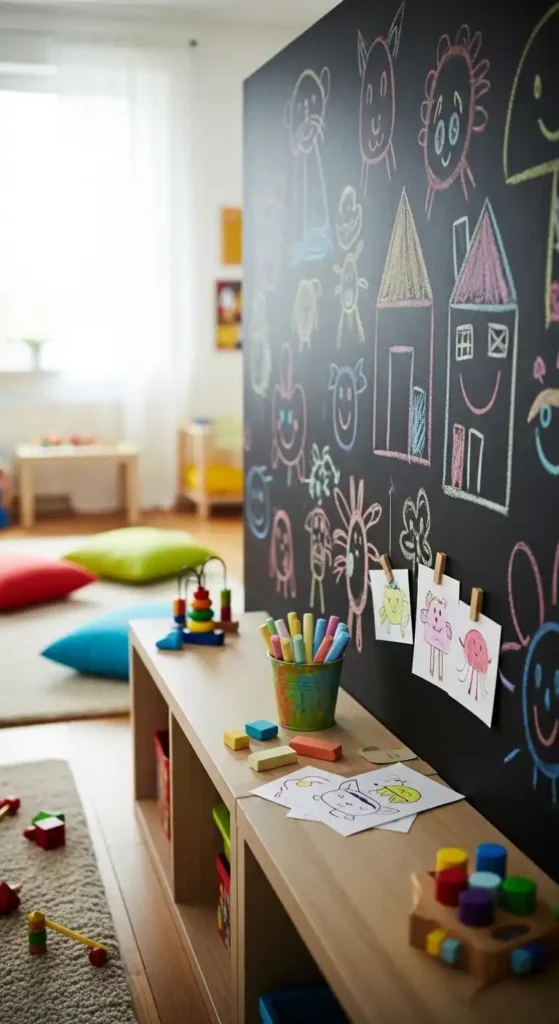
This setup reduces paper clutter and encourages repeated creative expression. Adding magnetic strips or holders for chalk and markers ensures tools are always accessible and organized. Parents enjoy easy cleanup, while children are motivated to explore new ideas continuously.
10. Rolling Storage Carts
Rolling carts with trays, drawers, or compartments provide flexible storage for toys, art supplies, or building blocks. Children can move the carts to different areas while playing and easily return items when finished, turning cleanup into a manageable task.
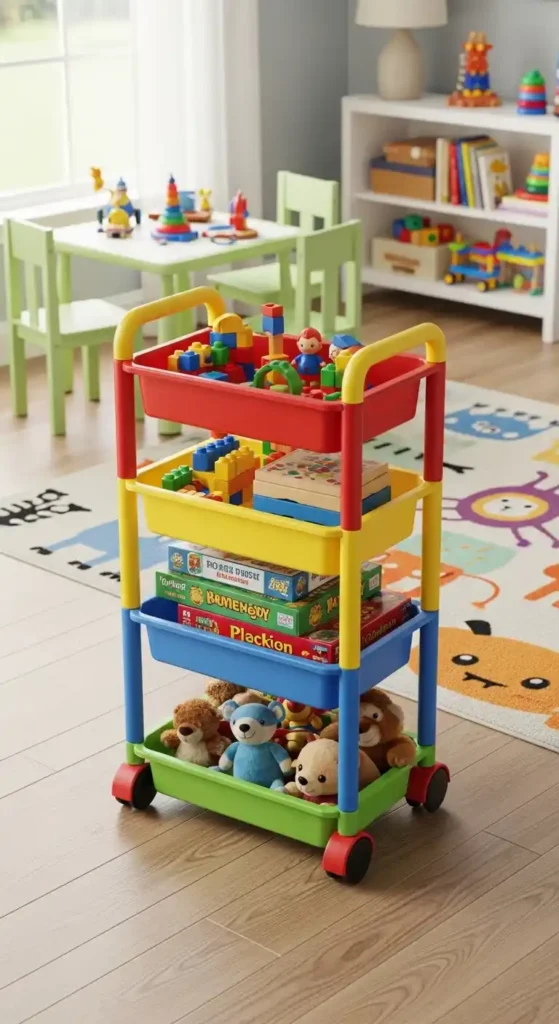
The mobility of these carts allows parents to quickly rearrange the room for different activities. Sorting trays or stacked compartments keep toys organized and accessible. This system combines practicality with convenience while teaching children responsibility.
11. Magnetic Play Boards
Magnetic boards with letters, numbers, shapes, or puzzles promote hands-on learning and fine motor development. Children can practice spelling, problem-solving, or building scenes, making learning interactive and enjoyable.

Parents can swap magnetic pieces to introduce new challenges or concepts. The low-mess design is easy to maintain, and mounting the board at child height encourages independent exploration. This feature keeps kids engaged while supporting educational growth.
12. Hide-and-Seek Storage
Furniture with hidden compartments, such as benches, ottomans, or shelves with secret drawers, adds playful functionality while keeping toys out of sight. Children enjoy discovering and storing items in these concealed spaces, turning tidying up into a game.
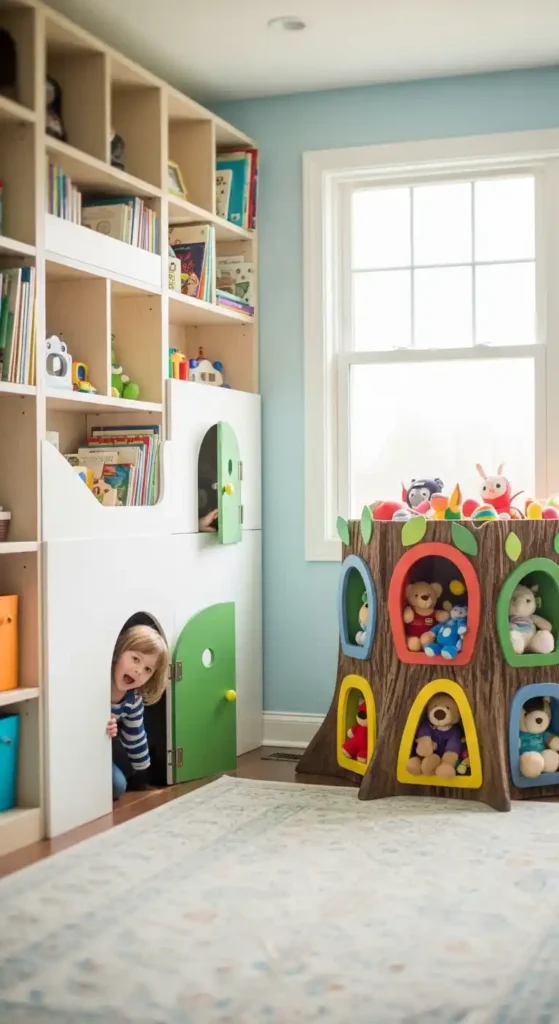
Parents benefit from extra hidden storage, which keeps the room looking neat and organized. This design works well for small toys, craft materials, or seasonal items. Incorporating playful styles ensures storage blends seamlessly into the fun environment.
13. Interactive Floor Games
Floor mats or rugs featuring hopscotch, roads, puzzles, or learning games encourage physical activity and cognitive development. Children can jump, crawl, and explore while engaging with numbers, letters, or themed environments.
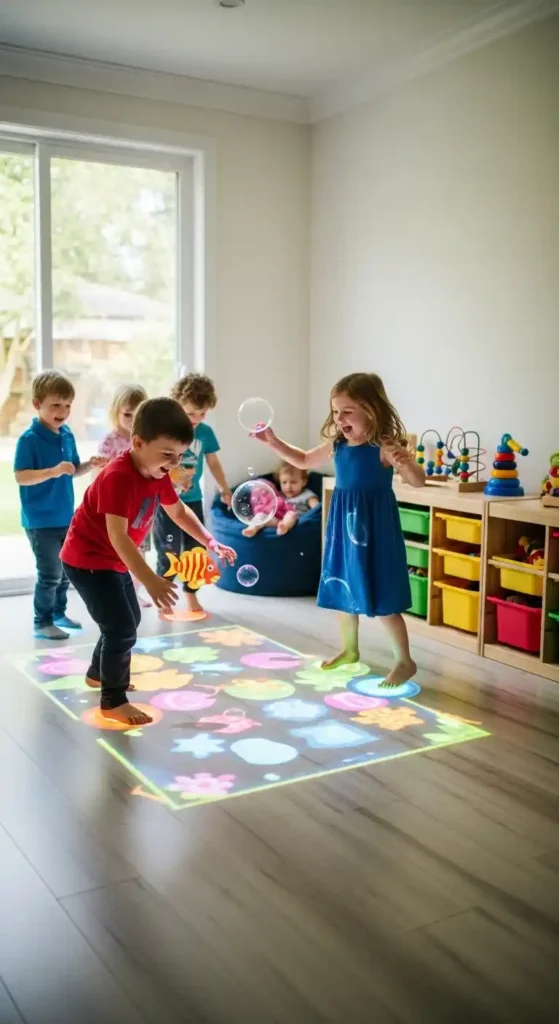
Portable mats make cleanup and rearrangement easy. Rotating games or mats keeps playtime exciting and dynamic. Parents enjoy a safe space for indoor physical activity while children develop coordination and problem-solving skills.
14. DIY Craft Wall
A craft wall with clipboards, corkboards, or string displays allows children to showcase artwork, rotate projects, and take pride in their creations. This setup motivates kids to organize and display their work in a visually appealing way.
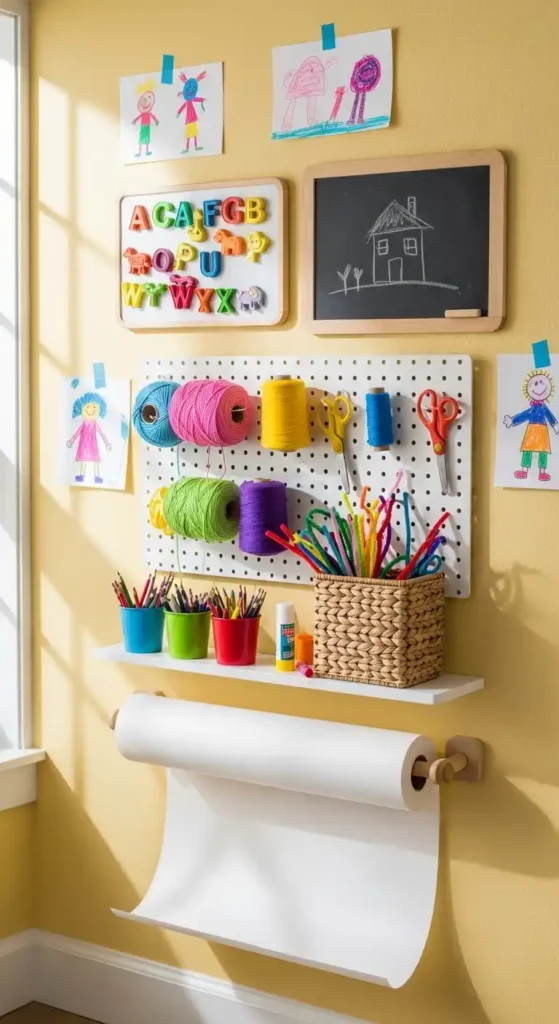
Parents enjoy seeing the child’s creative progress, and the wall also doubles as decorative room space. Changing projects periodically keeps the environment dynamic. This system encourages ownership, creativity, and a sense of accomplishment.
15. Mini Music Corner
A corner with child-sized instruments such as keyboards, drums, or shakers fosters auditory learning, rhythm development, and self-expression. Children can experiment freely, learning about melody and coordination while having fun.
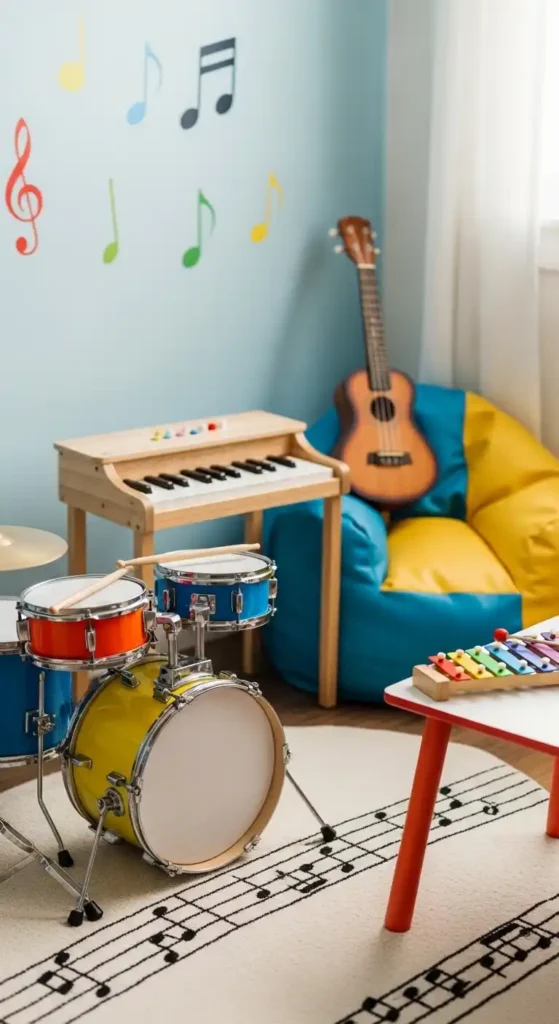
Soft mats and careful arrangement ensure safety. Parents can join in interactive music sessions, creating bonding experiences. Rotating instruments or introducing new sounds keeps the corner educational and engaging over time.
16. Convertible Furniture
Convertible furniture like foldable tables, chairs, or storage units maximizes functionality without taking up permanent space. Kids can use these for arts, snacks, or play, then fold them away to free the room for other activities.
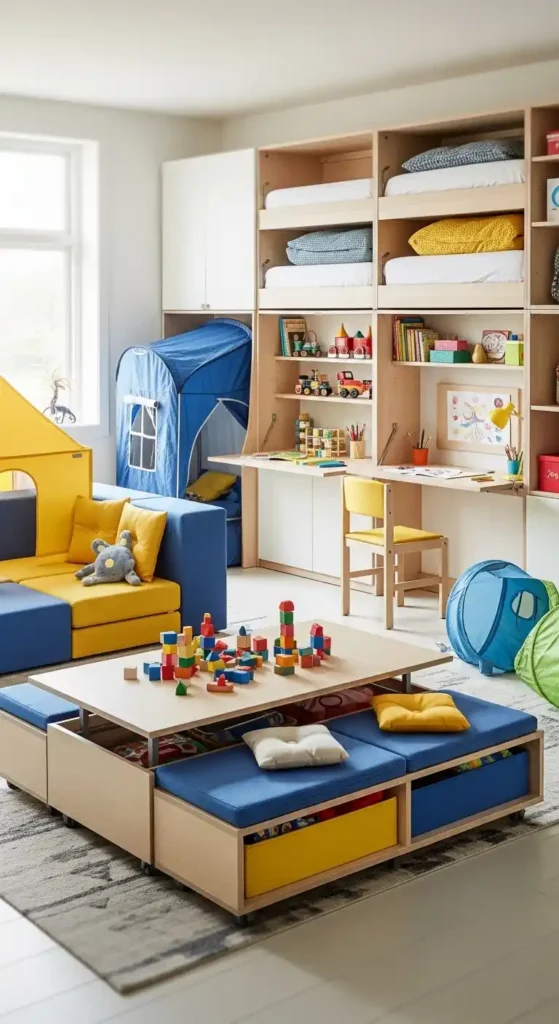
The flexibility allows the playroom to serve multiple purposes without feeling crowded. Parents appreciate the efficiency, while clever designs maintain a playful look. This approach makes small spaces versatile and organized.
17. Indoor Tent or Teepee
An indoor tent or teepee provides a cozy, magical hideaway for children. It can serve as a reading nook, quiet retreat, or imaginative play area. Adding soft cushions, fairy lights, or decorations enhances comfort and excitement.
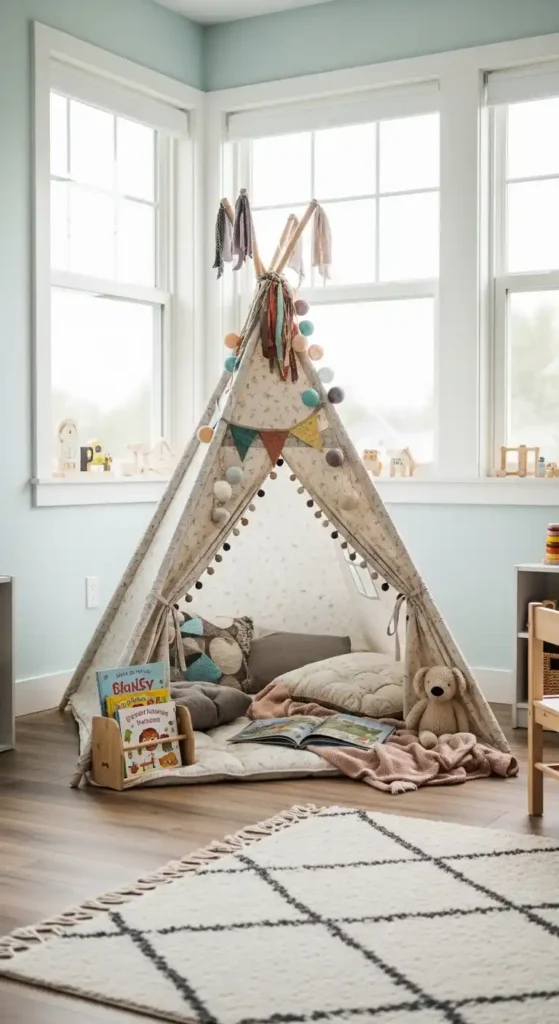
Children enjoy independent play, while parents have peace of mind knowing the area is contained and safe. This simple addition transforms a corner into a special zone that sparks imagination, encourages solitude, and supports creative play.
How to Maximize Storage in a Kids’ Playroom?
A great way to begin is by using Kids Play Room Ideas that create dedicated spaces for different types of toys. For example, applying Boys Gaming Bedroom Ideas can help organize play and gaming areas, making the room both fun and functional. Use shelves, bins, and cubbies to organize blocks, books, art supplies, and stuffed animals. Color-coded containers or picture labels help children know where items belong. This encourages them to clean up and keeps the room organized.
Make use of vertical space to free up the floor. Wall shelves, pegboards, and tall bookcases store items efficiently. Rolling carts or modular furniture add flexibility as kids grow. A clear storage system keeps the playroom tidy, functional, and enjoyable for both children and parents.
How to Make a Playroom Safe and Child-Friendly?
Start by choosing furniture and materials designed for children. Rounded edges on tables and shelves reduce the risk of bumps and injuries. Non-toxic paints, finishes, and safe flooring materials help protect children from harmful chemicals. Secure heavy furniture to the wall to prevent tipping, and make sure cords, outlets, and small choking hazards are out of reach.
Add soft flooring or rugs to cushion falls and provide a comfortable play area. Keep the room well-lit so children can see clearly and avoid accidents. Organize toys in bins and on shelves to reduce clutter, which helps prevent tripping. By combining safety features with thoughtful design, you can create a fun space where children can explore freely and parents can feel at ease.
Conclusion
A well-designed kids’ playroom balances fun, learning, and organization. Creative storage solutions, interactive zones, and themed areas help children explore and play. They can develop new skills while the space stays neat and manageable for parents. Safe, child-friendly furniture and materials make the environment comfortable and secure.
Versatile elements like rolling carts, convertible furniture, or cozy reading nooks add both flexibility and excitement. Thoughtful arrangement using these Kids Play Room Ideas creates a joyful space. It encourages imagination, creativity, and independent play.